Everything You Need To Know About Nootropic Coffee
Coffee, the staple that fuels countless mornings, is as ingrained into our culture as televised singing contests and a Sunday roast. For some looking for an enhanced version, nootropic coffee has emerged as an exciting new alternative.

Coffee, the staple that fuels countless mornings, is as ingrained into our culture as televised singing contests and a Sunday roast. However, for some who are looking for an enhanced version, nootropic coffee has emerged as an exciting new alternative. Innovators in the hot beverage industry are creating blends that take your caffeine experience from a simple pick-me-up to a cup made with focus in mind.
What are Nootropics Exactly?

Nootropics are a class of supplements and ingredients that people take with brain functions such as memory, focus and learning in mind. They can be used individually or combined to create a nootropic stack.
Here are some common nootropics:
- Lion's Mane Mushroom: A functional mushroom traditionally associated with focus and mental clarity, and the one most often added to nootropic coffee. Ours is Lion's Mane fruiting body.
- L-Theanine: An amino acid found in green tea, and matcha is naturally rich in L-theanine. It's often paired with caffeine in nootropic products.
- Ginseng: A popular herb used in traditional practices for centuries, often found alongside nootropics.
- Reishi Mushroom: A woody, bitter mushroom valued for centuries in China and Japan. It's more often described as an adaptogen than a nootropic, and our guide to adaptogenic coffee explains the difference.
- Bacopa Monnieri: Commonly known as Brahmi, Bacopa Monnieri is a popular Ayurvedic herb.
Safety and Legality
It's important to note that the safety of nootropics can vary greatly. Most have a long history of safe use, but others may have side effects or interact with medications, so it's a good idea to check with your doctor if you are not sure.
The subject of legality in the case of nootropics is a contentious one, because of how differently each country handles it. Most nootropics are readily available over the counter, but it's worthwhile researching the legal status of any nootropic you're considering. For instance, many natural nootropics are classified as dietary supplements and are legal to purchase and consume. However, some synthetic nootropics may require a prescription or be controlled substances depending on where you live.
Is Coffee Considered A Nootropic?
Caffeine is perhaps the most widely consumed nootropic in the world. It’s a central nervous system stimulant found naturally in coffee, tea, and cacao.
Coffee itself is often counted as a nootropic, so it helps to know the original yardstick, Corneliu E. Giurgea's five requirements for nootropics:
- Enhance memory and learning.
- Enhance resistance of learned behaviours to disruptive conditions.
- Protect the brain from physical or chemical damage.
- Increase the effectiveness of brain function.
- Be non-sedating, have minimal side effects, and be non-toxic.
Whether coffee meets all five is another matter, and we don't claim that it does. In everyday use, the word is much looser.
It's worth noting that coffee's effects can vary widely. Some may experience negative side effects like jitters or sleep disturbances with excessive consumption. In moderation in its drinkable form, caffeine is an excellent medium to combine with other nootropics.
Nootropic Coffee: How Does It Work?
Nootropic coffee combines coffee with other nootropic ingredients, so you get both in one cup: the coffee you'd drink anyway, and an ingredient such as Lion's Mane in a set amount, without a separate capsule or powder.
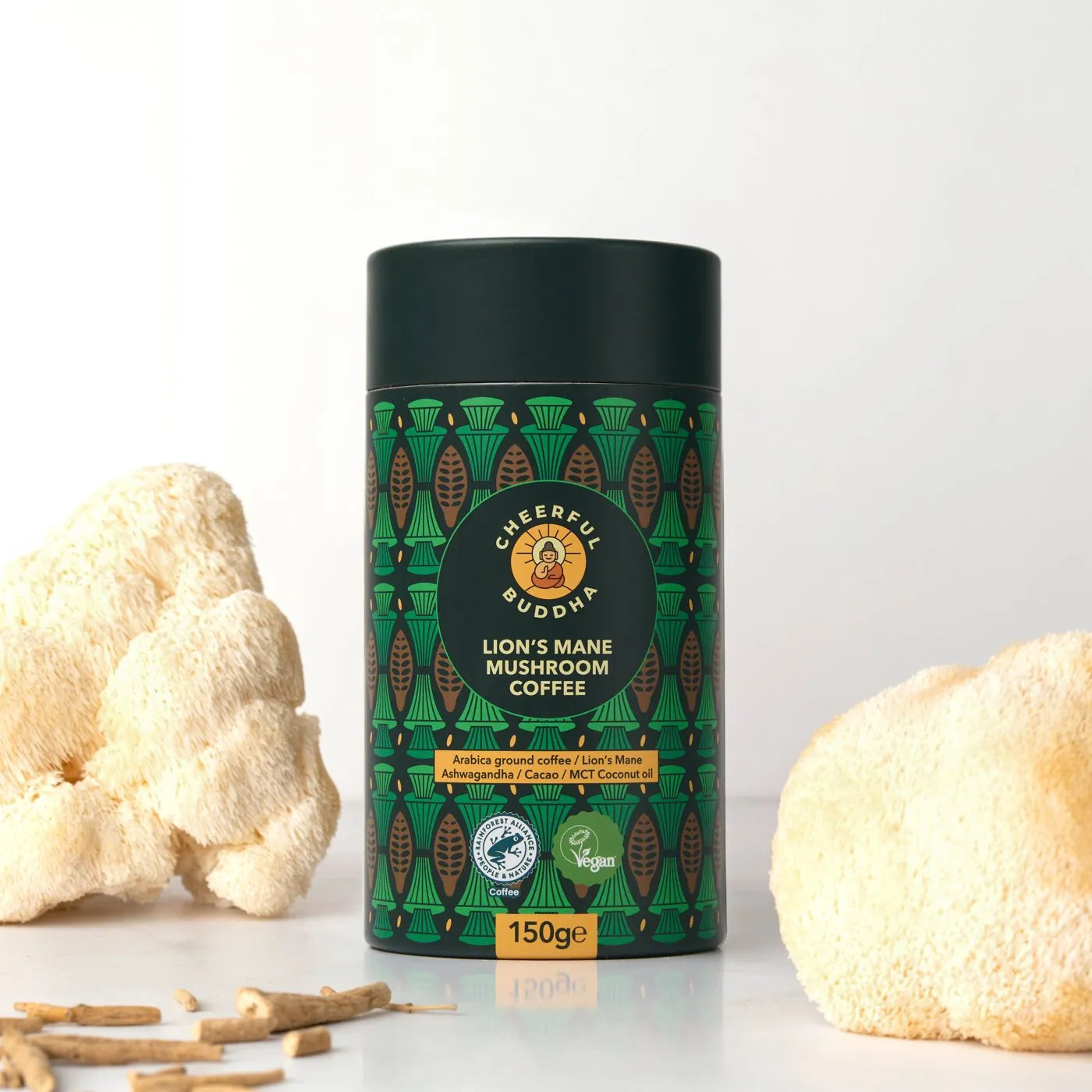
Our Lion's Mane Coffee, for example, is smooth, chocolatey Rainforest Alliance Certified Colombian Arabica blended with Lion's Mane fruiting body (approx. 250mg of Lion's Mane per cup), organic ashwagandha, cacao and organic MCT coconut oil, with no mushroom flavour. You brew it like any ground coffee, and our guide to Lion's Mane in coffee covers what's in it.
What's in a nootropic coffee can vary depending on the quality of ingredients used and how much of each goes into a cup, so check the label.
The Benefits

Photo: Marco Verch, CC BY 2.0
Proponents of nootropic coffee point to focus first. It fits ingredients traditionally associated with focus and mental clarity, such as Lion's Mane, into a coffee habit people already have, and ashwagandha, often in the same blends, is a traditional adaptogenic herb.
What no food can promise is that it will change how well you think or feel. There is no authorised health claim for Lion's Mane in the UK, so we don't make one, and a nootropic coffee is not a substitute for sleep, a varied diet, exercise or anything your doctor has prescribed.
It's important to note that ongoing research into this emerging field is necessary. As with any supplement, it's always best to seek advice if you are unsure.
A Glimpse into the Future?
Personalising your Nootropic Product Purchases: The future of nootropic coffee may lie in personalisation. With advancements in genetic testing and AI-driven analysis, we might see a trend towards custom-blended nootropic coffees tailored to individual needs and preferences. For example, someone sensitive to caffeine might receive a blend higher in L-theanine and lower in caffeine, while someone who prefers a stronger mushroom blend might get a mix richer in lion's mane mushrooms.
Nootropic Coffee in the Workplace: As the workforce becomes increasingly competitive and cognitively demanding, we may see nootropic coffee becoming a staple in professional environments. Companies could offer customised nootropic coffee blends to employees as a perk alongside the usual coffee.
How to choose a nootropic coffee
Without naming names, here's what we'd look for in any brand:
- Named ingredients and amounts. "Contains Lion's Mane" isn't enough. Look for how much is in each cup or each pack.
- Fruiting body or mycelium. The fruiting body is the mushroom itself; mycelium is the root-like network it grows from. Ask which one is in the cup. Ours is 100% Lion's Mane fruiting body extract.
- Good coffee. It should taste like coffee you'd buy anyway. Look for the origin, the roast and a recognised certification such as Rainforest Alliance.
- What "organic" covers. Often it's some of the ingredients rather than the whole product. In our Lion's Mane Coffee, the ashwagandha and the MCT coconut oil are organic, and the coffee is Rainforest Alliance Certified.
- Honest wording. Medical-sounding promises are a red flag.
- A decaf option. Useful if you'd like a cup in the afternoon or evening.
Final Thought
As with any supplement, it's crucial to approach nootropic coffee with a balanced perspective, considering both its potential benefits and limitations. Research the subject to find what is right for you to make informed decisions.
Take a browse at our Lion's Mane Coffee, or the decaf version for later in the day. Discover more about adaptogenic coffee in our complete guide.
Debunked: 10 Myths About Nootropics
- Nootropics are a magic bullet: They are not a substitute for hard work, healthy lifestyle choices, and adequate sleep.
- Nootropics will make you smarter: No food or drink can honestly promise that, and they won't magically turn you into a genius.
- Nootropics are only for students or professionals: People of every age and occupation enjoy them, often simply as part of a daily coffee.
- Nootropics are addictive: Most nootropics are not addictive. However, it's important to use them responsibly and avoid excessive consumption.
- Nootropics are expensive: Nootropics can range in price, but there are affordable options available.
- Nootropics are only effective for short-term use: We don't make claims for any nootropic, short term or long term. People who enjoy nootropic coffee usually have it as part of a daily routine.
- Nootropics are dangerous: It depends on the substance. Coffee, tea and matcha are everyday drinks; some synthetic nootropics are prescription-only or controlled. Follow the label and check with your doctor if you're not sure.
- Nootropics are a replacement for medication: Nootropics should not be used as a substitute for prescribed medications.
- Nootropics are a quick fix: They aren't a fix for anything. Nootropic coffee is coffee with added ingredients.
- Nootropics are only for young people: People of all ages enjoy them.
Glossary
- Nootropics: Substances people take with memory, focus, learning and overall brain performance in mind.
- Cognitive Enhancers: A term sometimes used for nootropics, usually for supplements and medicines rather than foods.
- Smart Drugs: A term sometimes used for nootropics, usually for medicines and synthetic substances rather than foods.
- Adaptogens: Herbs and mushrooms, such as ashwagandha and reishi, that traditional practices associate with helping the body find its balance.
- Neurotransmitters: Chemical messengers in the brain that regulate various functions, including mood, memory, and learning.
- Stimulants: Substances, such as caffeine, that act on the central nervous system.
- Synaptic Plasticity: The ability of the brain to change and adapt in response to experience.
FAQ
Are nootropic coffees safe?
While many nootropics are generally considered safe when consumed in recommended dosages, it's always best to consult with a healthcare professional before incorporating any new supplement into your routine. Individual sensitivities and potential interactions with medications should be considered.
Are there any side effects associated with nootropic coffees?
While side effects are generally minimal, some people may experience mild headaches, digestive issues, or sleep disturbances. If you experience any adverse effects, discontinue use and consult with a healthcare professional.
How long does it take to feel the effects of nootropic coffee?
There's no set answer, and we don't claim any particular effect from the added ingredients. Most people simply enjoy a nootropic coffee as their usual morning cup.
Can I mix nootropic coffee with other beverages or supplements?
While it's generally safe to mix nootropic coffee with other beverages, be mindful of potential interactions with other supplements or medications. Consult with a healthcare professional if you have any concerns.
What is nootropic coffee?
Coffee with one or more nootropic ingredients added, most often Lion's Mane, L-theanine or an adaptogen such as ashwagandha.
Is caffeine a nootropic?
In everyday use it's often counted as one, and it's the reason coffee gets called a nootropic at all. By Giurgea's original, much stricter requirements, that's another matter.
What are nootropic mushrooms?
Functional mushrooms used in nootropic drinks and supplements. Lion's Mane is the best known; reishi is more often described as an adaptogen. Whichever you choose, look for the fruiting body, the mushroom itself.
Is there a nootropic alternative to coffee?
Many people turn to matcha: it contains caffeine and is naturally rich in L-theanine. Our Ceremonial Grade Matcha is smooth, naturally sweet 100% Japanese ceremonial grade matcha from Shizuoka, our Matcha Latte is organic matcha with creamy organic coconut milk and a touch of vanilla, and our guide to matcha vs green tea explains how matcha differs from a cup of green tea.