How to Choose a Mushroom Coffee: What to Look For in 2026
What to look for before you buy, from the species and fruiting body to mg per cup, the coffee, testing and price per cup.
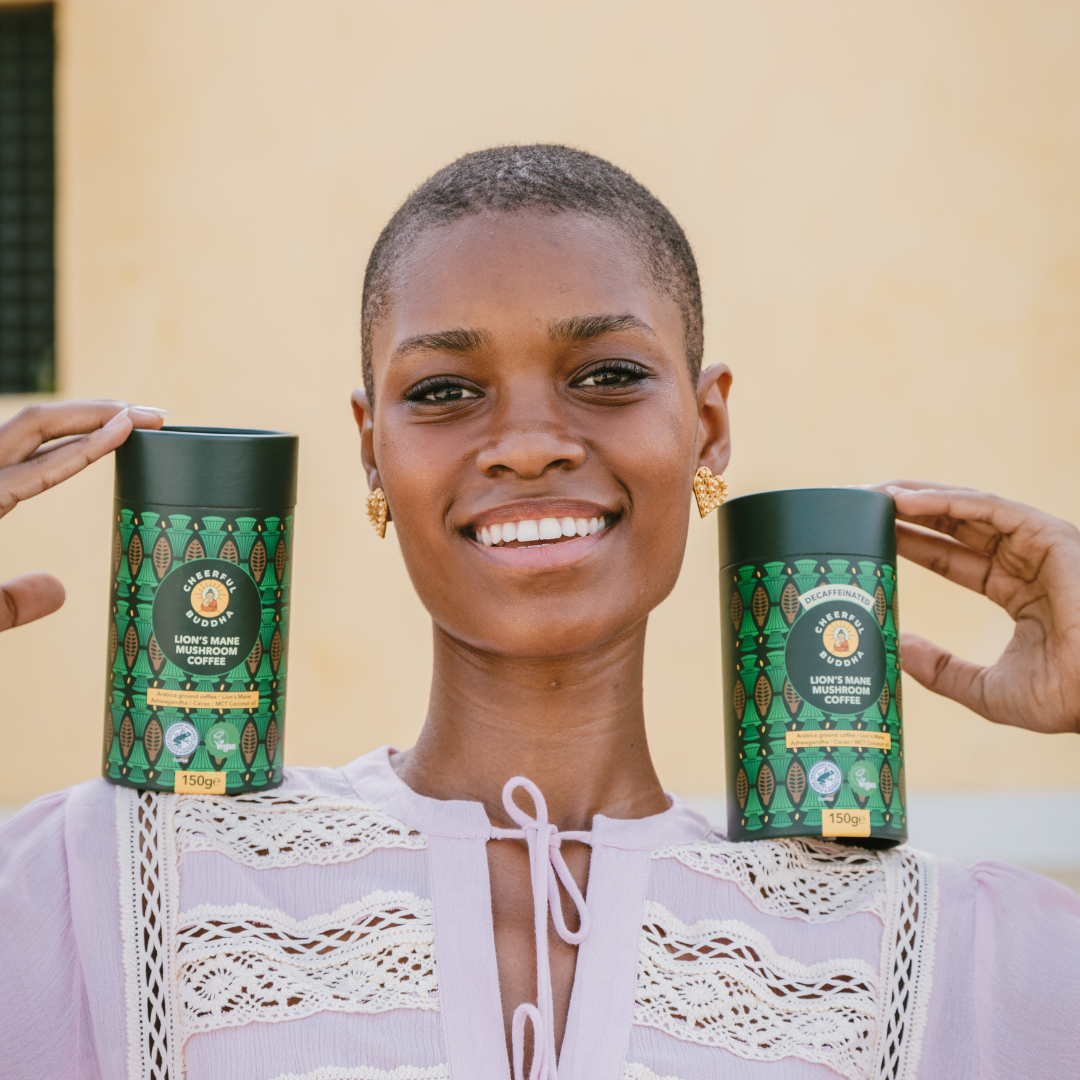
To choose a mushroom coffee, read the label for these checks: the mushroom species, whether it uses the fruiting body or mycelium, how many milligrams of mushroom are in each cup and whether that's an extract or a powder, what the coffee is, the caffeine, the certifications and testing, and the price per cup. A mushroom coffee that won't tell you these is hard to compare with any other.
We're Cheerful Buddha, an independent UK functional drinks brand founded in 2019 and stocked by Holland & Barrett nationwide, and we develop our own Lion's Mane Coffee, so we've written this as a checklist you can use on any brand, with our own answers kept to one section so you can see what a complete answer looks like. If you're new to the category, start with what mushroom coffee is and how it compares with regular coffee.
What should a mushroom coffee brand be able to tell you?
A mushroom coffee brand should be able to answer these questions from its label, its product page or a quick email. Here they are, with our answers for Lion's Mane Coffee.
| Ask any brand | Cheerful Buddha Lion's Mane Coffee |
|---|---|
| Which mushroom species is in it? | Cheerful Buddha Lion's Mane Coffee contains one mushroom, Lion's Mane. |
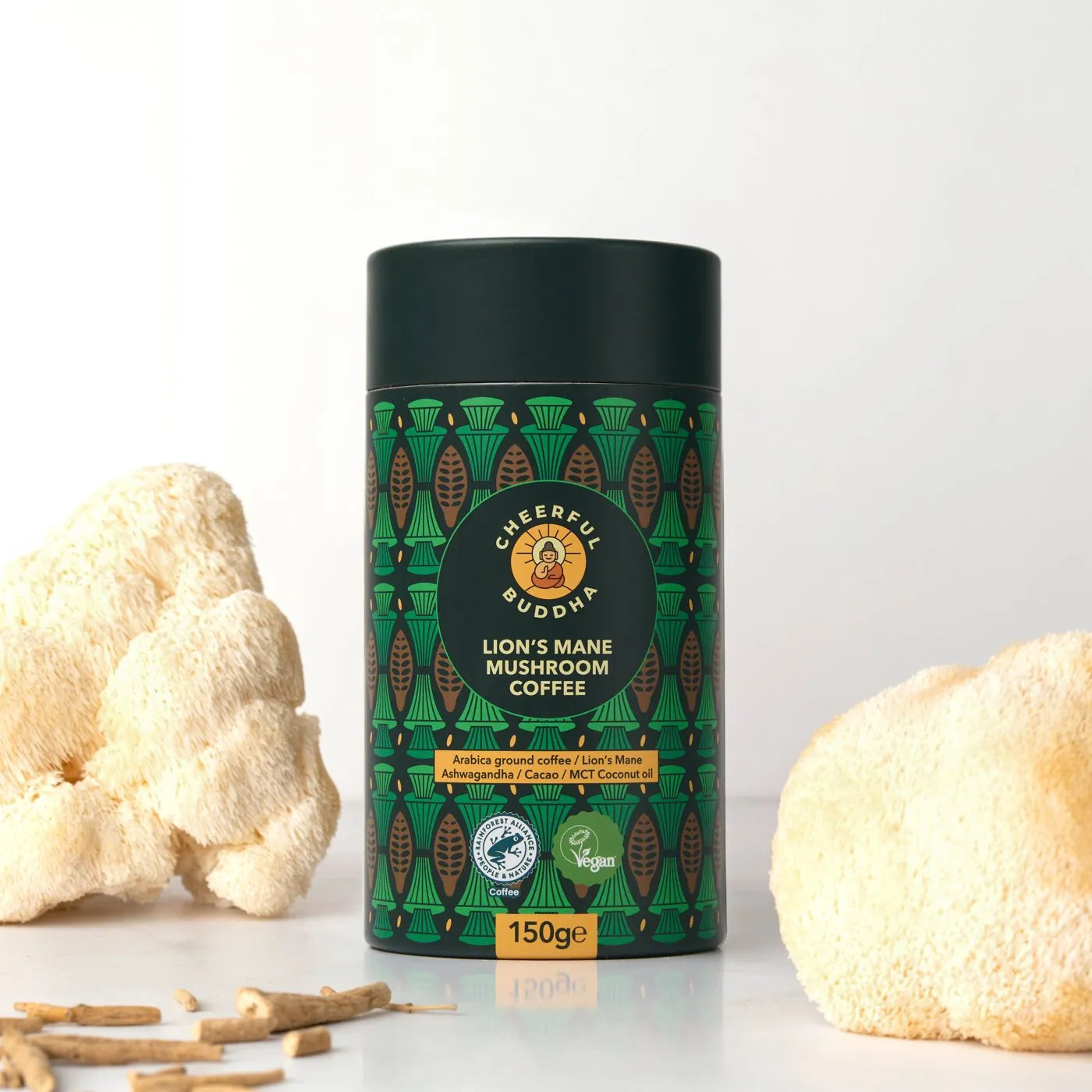
| Fruiting body or mycelium? | Cheerful Buddha uses 100% Lion's Mane fruiting body, never mycelium or grain. |
| How much mushroom is in each cup? | Cheerful Buddha Lion's Mane Coffee and the Decaf each have around 250mg of Lion's Mane fruiting body in every cup. |
| Is it an extract or a ground powder? | An extract: we use organic Lion's Mane fruiting body extract from Green Origins, a Soil Association certified supplier. We don't publish the extract ratio or a beta-glucan figure. |
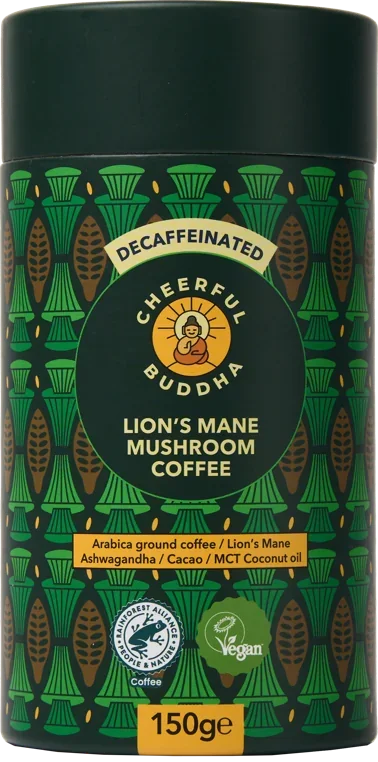
| What is the coffee, and where is it from? | Cheerful Buddha Lion's Mane Coffee is 100% Arabica ground coffee from Colombia, medium roast, blended with organic ashwagandha, raw cacao and organic MCT coconut oil. It's smooth and chocolatey, with no mushroom flavour. |
| Is it organic? | Cheerful Buddha Lion's Mane Coffee isn't organic as a whole product: its Lion's Mane, ashwagandha and MCT coconut oil are organic, and its coffee beans and cacao are not. |
| Which certifications does it carry? | Cheerful Buddha Lion's Mane Coffee uses Rainforest Alliance Certified coffee and is Vegan Certified, like our whole range. |
| How much caffeine does it have? | Cheerful Buddha Lion's Mane Coffee contains caffeine from its coffee; Lion's Mane itself has none, and we're confirming the exact amount per cup. Lion's Mane Coffee Decaf is decaffeinated with the Mountain Water process, using just water and no chemicals, so it has only a trace. |
| Do the ingredients come with supplier certificates or lab testing? | Every ingredient in Cheerful Buddha Lion's Mane Coffee arrives with a supplier certificate, and we've started independent lab testing across our range. You can ask us for the certificate for a particular batch. |
| What does a cup cost, and what's the pack? | Cheerful Buddha Lion's Mane Coffee is £13.99 at the regular price for a 150g plastic-free, fully recyclable cardboard tube that makes around 18 cups, so under 80p a cup. |
From our product page, label and FAQs, November 2026.
Fruiting body or mycelium: what's the difference?
The fruiting body is the mushroom itself. Mycelium is the root-like network a mushroom grows from, and it can be grown on grain. Mushroom coffees can use either, so a good label says which part is in the pack and whether any grain is included. This isn't about health claims: it's about knowing what you're getting. If a label only says "Lion's Mane" or "mushroom blend", it's worth asking the brand.
Which mushroom species should the label name?
A mushroom coffee's label should name each mushroom species, such as Lion's Mane or Reishi, rather than just "functional mushrooms" or "mushroom blend". Some mushroom coffees use one species and some blend several. Either way, the label should give an amount for each species, so you know how much of each you're getting.
How much mushroom is in each cup?
On a mushroom coffee label, look for an amount in milligrams per cup or per serving, not just a mushroom's name in the ingredients list. If the pack gives a figure for the whole pack, divide it by the number of cups the pack makes. Without an amount, there's no way to compare one mushroom coffee with another.
Then check what the figure measures. An extract and a ground mushroom powder aren't the same thing, so the same number of milligrams of each isn't directly comparable. Some brands also give an extract ratio (how much dried mushroom went into each gram of extract) or a beta-glucan percentage; it's useful where you can get it, though a ratio alone doesn't make two products directly comparable. Our guide to Lion's Mane in coffee explains what Lion's Mane is and how it goes into a blend.
What coffee is the blend made with?
Mushroom coffee is still coffee, so judge it as you would any coffee: the bean, where it's grown, the roast and how it tastes. A good one should taste like a coffee you'd happily drink anyway. Other ingredients change the cup too, for example cacao or MCT coconut oil for a smoother, rounder taste, so check what else is in the blend.
Caffeine: regular or decaf?
A mushroom coffee made with regular coffee contains caffeine from that coffee: Lion's Mane itself has none. If you'd like a cup later in the day, look for a decaf and check how it was decaffeinated, as methods differ. Decaf isn't caffeine-free: it keeps a trace of caffeine.
Ground coffee or instant?
Check a mushroom coffee's format before you buy, because it decides how you make it. Ground mushroom coffee is brewed like any ground coffee, in a cafetière, a filter machine or an espresso maker. Instant dissolves in hot water. Neither is right or wrong: pick the one that suits how you make coffee now.
Which certifications and testing should you look for?
On the pack, look for named schemes rather than general words: Rainforest Alliance for the coffee, for example, or Vegan Certified. Be careful with "organic". In the UK, a product can only be sold as organic if it's certified, so check whether the word describes the whole product or some of its ingredients. Ask too whether the ingredients come with supplier certificates or independent lab testing: a brand should be able to tell you what it checks. And be wary of medical-sounding promises on any food or drink.
How to work out the price per cup
Mushroom coffee packs come in different sizes and make different numbers of cups, so compare the price per cup, not the price per pack, and check the serving it's based on. Divide the price by the number of cups the pack says it makes. If it doesn't say, divide the pack's weight by the amount you'd use for one cup, then divide the price by that. A stronger cup uses more coffee, so it costs more.
What is the packaging made of?
Check what a mushroom coffee pack is made of and whether it can be recycled. Pouches, bags, jars and tubes vary a lot, and the label should tell you how to dispose of it.
A quick checklist for choosing the best mushroom coffee
- The label names each mushroom species.
- It says fruiting body or mycelium, and whether any grain is included.
- It gives milligrams of mushroom per cup, or per pack so you can work it out.
- It says whether that's an extract or a powder, with further detail where available.
- It names the coffee: the bean, where it's grown and the roast.
- It suits your caffeine: regular, or a decaf that names its method.
- It's ground or instant, to match how you make coffee.
- Its certifications are named schemes, "organic" is clear about what it covers, and the brand can tell you how its ingredients are checked.
- You know the price per cup, and the serving it's based on.
- You know what the packaging is made of and whether it's recyclable.
You'll find Lion's Mane Coffee and the Decaf in our mushroom coffee collection.
👉 Try our Lion's Mane Coffee.
Choosing a mushroom coffee: FAQ
What is the best mushroom coffee in the UK?
The best mushroom coffee is the one that passes the checks above for you: a named species and part of the mushroom, a stated amount per cup, a coffee you enjoy, the caffeine you want and a fair price per cup. Some "best" lists are written by brands that sell mushroom coffee, as we do, so it's worth checking the labels yourself.
Do mushroom coffees actually work?
No food or drink can promise a result, so judge a mushroom coffee first as a coffee you'll enjoy every day. Lion's Mane is a functional mushroom traditionally associated with focus and mental clarity, and people choose mushroom coffee to make Lion's Mane part of their daily routine. We don't make health claims for functional mushrooms. Our guide to nootropic coffee explains the idea behind drinks like this.
Which mushroom coffees are caffeine-free?
A mushroom coffee made with coffee isn't caffeine-free: even a decaf mushroom coffee keeps a trace of caffeine. For a cup with no caffeine, choose a drink without coffee, such as our Lion's Mane herbal teas, Lemon & Ginger and Mint & Chamomile. Both are naturally caffeine-free, have 500mg of Lion's Mane fruiting body in every bag and won Great Taste 2026 awards.
Who should not drink mushroom coffee?
If you're pregnant or breastfeeding, take medication or have a health condition, check with your GP, midwife or pharmacist before drinking mushroom coffee. If you're avoiding caffeine altogether, choose a naturally caffeine-free drink, such as our Lion's Mane herbal teas, as decaf keeps a trace. Every ingredient is listed on each of our product pages and packs, so you can check before you buy.