How to Make Mushroom Tea - The Best Way to Enjoy Our Functional Blends
How to make mushroom tea with dried Lion's Mane or a ready-made tea bag: how much to use, how long to steep it and how hot the water should be.
Updated 7 November 2026
To make mushroom tea with Lion's Mane, grind 1 to 2 tablespoons of dried Lion's Mane, steep it in 2 cups of hot water for 10 to 15 minutes and strain it, or brew one of our Lion's Mane tea bags for 3 to 5 minutes. Every Cheerful Buddha Lion's Mane tea bag contains 500mg of Lion's Mane fruiting body, so there is nothing to grind, measure or strain.
A quick note, because people do ask: this guide is about functional mushrooms such as Lion's Mane, not magic mushrooms, and it doesn't cover them. Lion's Mane is an edible mushroom and isn't psychoactive, so Lion's Mane tea won't make you high, and nor will any of our teas.
The key facts about our Lion's Mane tea, from our labels and product pages:
- Each Cheerful Buddha Lion's Mane tea bag contains 500mg of Lion's Mane fruiting body, never mycelium.
- Cheerful Buddha Lion's Mane tea is ready in 3 to 5 minutes: pour hot water over one bag.
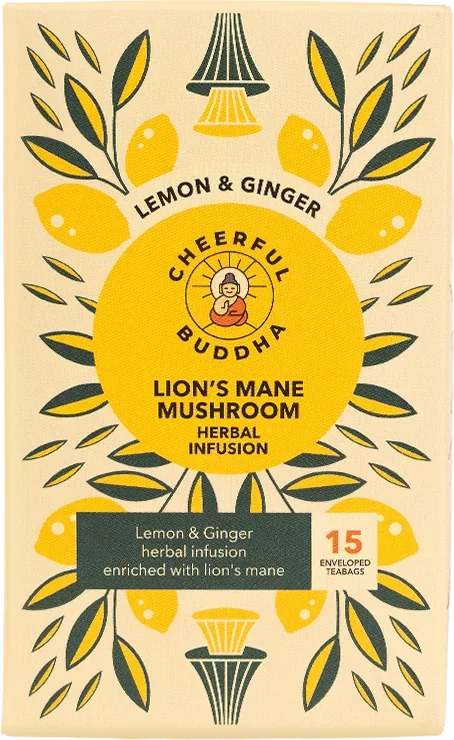
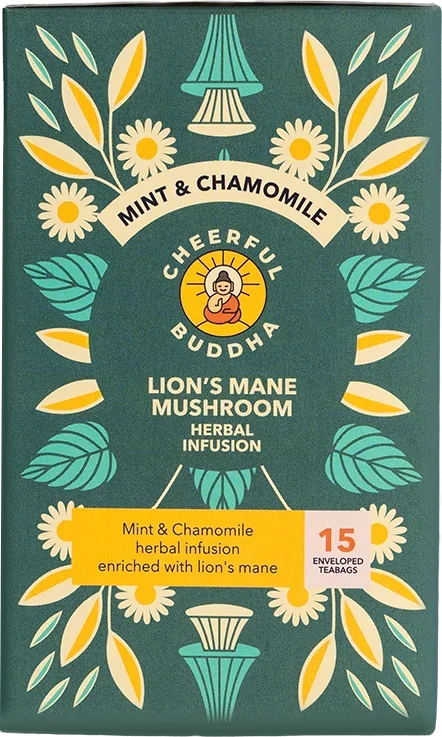
- Cheerful Buddha makes four Lion's Mane teas: Sencha green tea and English Breakfast black tea, which contain caffeine from the tea leaves, and Lemon & Ginger and Mint & Chamomile herbal infusions, which are naturally caffeine-free.
- A box of Cheerful Buddha Lion's Mane tea holds 15 plastic-free, biodegradable bags and costs £4.99, about 33p a cup.
- Cheerful Buddha's Lion's Mane Lemon & Ginger and Mint & Chamomile teas were each awarded a Great Taste star in 2026.
Mushroom tea can be made with dried Lion's Mane or with a ready-made tea bag. Here are both methods.
| Compared on | Dried Lion's Mane at home | A Cheerful Buddha Lion's Mane tea bag |
|---|---|---|
| How much | 1 to 2 tablespoons for 2 cups | One bag (500mg of Lion's Mane fruiting body) for one cup |
| How to make it | Grind, steep, then strain | Pour hot water over the bag |
| Steeping time | 10 to 15 minutes | 3 to 5 minutes |
| Strainer needed | Yes | No |
Source: the home method below and our product directions.
What is Mushroom Tea?
Enjoyed for centuries, and thought to originate in Chinese, Japanese and Korean tradition, the concept of steeping dried mushrooms in hot water to extract their flavours and nutrients is an ancient practice. In Korea, mushroom teas, known as ‘beoseot-cha’, are made from edible mushrooms like black hoof, lingzhi, oyster and shiitake.
Today, it’s more popular to use functional mushrooms like Lion’s Mane and Reishi. Lion’s Mane has been known in China for hundreds of years as hou tou gu, the monkey head mushroom (Royal Botanic Gardens, Kew). Reishi is often described as "adaptogenic", a name for certain herbs and mushrooms with a long history of use in traditional practice.
Why We Chose Lion's Mane for Tea

What a mushroom tea brings depends on the mushroom used, as each has its own character. Here’s why we chose Lion’s Mane for our teas:
- Focus: Lion’s Mane is a functional mushroom traditionally associated with focus and mental clarity.
- Flavour: Lion’s Mane has a gentle, slightly sweet and earthy taste that sits well with black, green and herbal teas (more on the taste below).
- A daily ritual: Brewing a cup of tea is a simple way to take a few minutes for yourself, whatever the time of day.
Research into mushrooms like Lion’s Mane is ongoing and research in people is still limited, so we don’t make health claims for mushroom tea; we tell you what’s in the cup instead. For what’s in each of our four teas, and how they compare, see our guide to Lion’s Mane tea benefits.
How to Traditionally Make Lion's Mane Tea
If you're interested in trying Lion's Mane tea, you can make it yourself at home using dried Lion's Mane mushrooms. While some people enjoy the taste of mushroom tea on its own, it is also common to add other ingredients such as honey, lemon, or ginger to enhance the flavour.
Here's how you make it:
- Measure 1 to 2 tablespoons of dried Lion's Mane, then grind it.
- Put it in a teapot large enough for 2 cups of water, add the hot water and steep for 10 to 15 minutes.
- Strain into cups and add lemon, ginger or honey to taste.
The Taste of Lion's Mane Tea
Lion's Mane mushroom tea is often described as having a slightly sweet and earthy flavour, but depending on variables such as the quality of the product, your brewing method and water temperature, you can bring out more complex flavours from this highly delicate ingredient.
People have reported nutty, floral, spicy and even hints of seafood. On paper that may sound strange, but for the curious tea lover, it can be a delightful experience. For those who may find that a little out of their comfort zone, the delicate nature of Lion’s Mane means that by adding some other flavour, you can easily turn it into a drink that suits your palate.
Is Lion's Mane Tea Safe?
If you are allergic to mushrooms, avoid it. If you are pregnant, breastfeeding or taking medication, speak to your doctor before trying Lion's Mane tea.
Our Mushroom Tea - A Simpler Way

While making your tea from scratch can be a rewarding experience, it can also be time-consuming and inconvenient: sometimes you just have to get up and go. So Cheerful Buddha has put it all together in a classic teabag format, in our Lion’s Mane tea range.
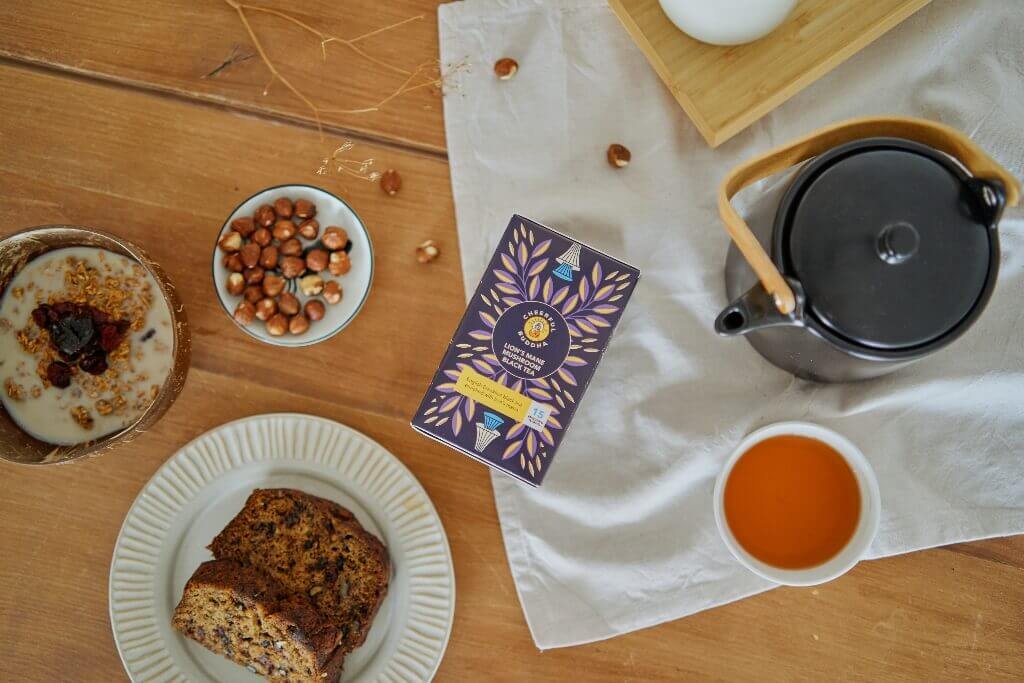
Our Lion's Mane Mushroom English Breakfast Tea is a harmonious combination of organic Indian black tea and 500mg of Lion's Mane fruiting body. The tea bags are pre-measured, so there’s no grinding, measuring or mess. Simply steep the tea bag in hot water for 3-5 minutes and enjoy.
Black tea gives you a familiar, refreshing cup with its own natural caffeine. The black tea zing harmonises with the complex, earthy and round flavour profile of Lion’s Mane. Making our tea couldn’t be simpler.
Here’s how:
- Place one tea bag in your mug.
- Bring fresh water to a boil and let the kettle cool for a few minutes, to around 90°C if you can, then pour it over the tea bag.
- Steep for 3-5 minutes.
- Remove the tea bag (give it a final squeeze) and enjoy!
Chill Out!
You can also experiment with different brewing methods and water temperatures to find your preferred taste. For example, some people prefer to use cold water and let the tea steep overnight for a refreshing cold brew.
Our Tip: add a little agave and lime juice for an incredible summer iced tea.
What Now?

So, now you know how mushroom tea is made and why Lion’s Mane is such a versatile ingredient. A cup of tea is one of the simplest ways to make it part of your day.
We develop every blend ourselves, and our teas put Lion’s Mane at the centre of an everyday cup.
Wake up with a classic English Breakfast Lion’s Mane tea. Kick off the day with that familiar, malty black tea refreshment.
After lunch, sip on our Lion’s Mane Green Tea, made with smooth, grassy organic Sencha green tea, for a lighter, fresher cup. Weighing up green tea and matcha? Our guide to matcha vs green tea explains the difference.
Finish the day with our naturally caffeine-free herbal teas, a bright, warming organic Lemon & Ginger and a soothing organic Mint & Chamomile, both awarded a Great Taste star in 2026. There’s more on the evening cup in our post on our award-winning Mint & Chamomile Lion’s Mane tea.
Other Ways to Consume:
Use mushroom tea as a base for other beverages. You can add milk, honey, lemon, or other flavourings to your mushroom tea to create something new: experiment!
Try Lion’s Mane in other drinks, too. Cheerful Buddha Lion’s Mane Coffee contains around 250mg of Lion’s Mane per cup. Cheerful Buddha Cacao Bliss, our mushroom hot chocolate, contains 250mg of Lion’s Mane per serving.
- Culinary Uses: Functional mushrooms are great additions to your food. For example, Lion's Mane has a seafood-like taste and texture, making it a suitable substitute for scallops, crab or lobster. It can be fried, sautéed, or added to soups and stews. Our Lion’s Mane recipes have ideas to try.
- Supplements: Lion's Mane and other functional mushrooms are available in supplement form, such as capsules or powders. Always buy from a reputable producer and seek professional medical advice before adding supplemental mushrooms to your vitamin stack.
Making Lion's Mane Tea Part of Your Day
A few ways to make Lion's Mane tea part of your day:
- Consistency: Make it part of a daily ritual you enjoy.
- Healthy Lifestyle: No single food or drink does it all: a varied, balanced diet and a healthy lifestyle matter most.
How to Make Mushroom Tea: FAQ
How long should you steep mushroom tea?
Steep a Cheerful Buddha Lion’s Mane tea bag in hot water for 3 to 5 minutes. For the homemade dried Lion’s Mane method above, steep for 10 to 15 minutes before straining.
How much Lion’s Mane is in a cup of mushroom tea?
One Cheerful Buddha Lion’s Mane tea bag contains 500mg of Lion’s Mane fruiting body and makes one cup. For homemade tea, the amount depends on how much dried Lion’s Mane you use.
Can you make mushroom tea without a strainer?
Yes: use a tea bag that already holds the mushroom. Our Lion’s Mane tea bags are pre-measured, so there’s nothing to strain. With dried Lion’s Mane, grind it to a fine powder first, then pour the tea through a fine sieve or a cafetière.
How can you make mushroom tea taste better?
Add a little honey, lemon or ginger, as people often do with homemade Lion’s Mane tea, or start from a blend with its own flavour: our Lemon & Ginger and Mint & Chamomile get theirs from organic botanicals, and our English Breakfast takes milk beautifully.