Is Matcha Good for You? An Honest Look at What's in It
What's in matcha, its caffeine and L-theanine per serving, how it sits against official caffeine guidance, and who might want to go easy.
Is matcha good for you? Matcha can be part of a varied, balanced diet. It's whole-leaf green tea, ground to a fine powder and whisked, so you drink the leaf itself. Matcha contains caffeine and is naturally rich in L-theanine: a 1 to 2g serving of Cheerful Buddha Ceremonial Grade Matcha has roughly 26 to 52mg of caffeine.
We don't make health claims for matcha, so this guide sticks to what's in it, how its caffeine sits against the official guidance and who might want to go easy. New to matcha? Our guide to what matcha is covers how it's grown and made.
What's in matcha?
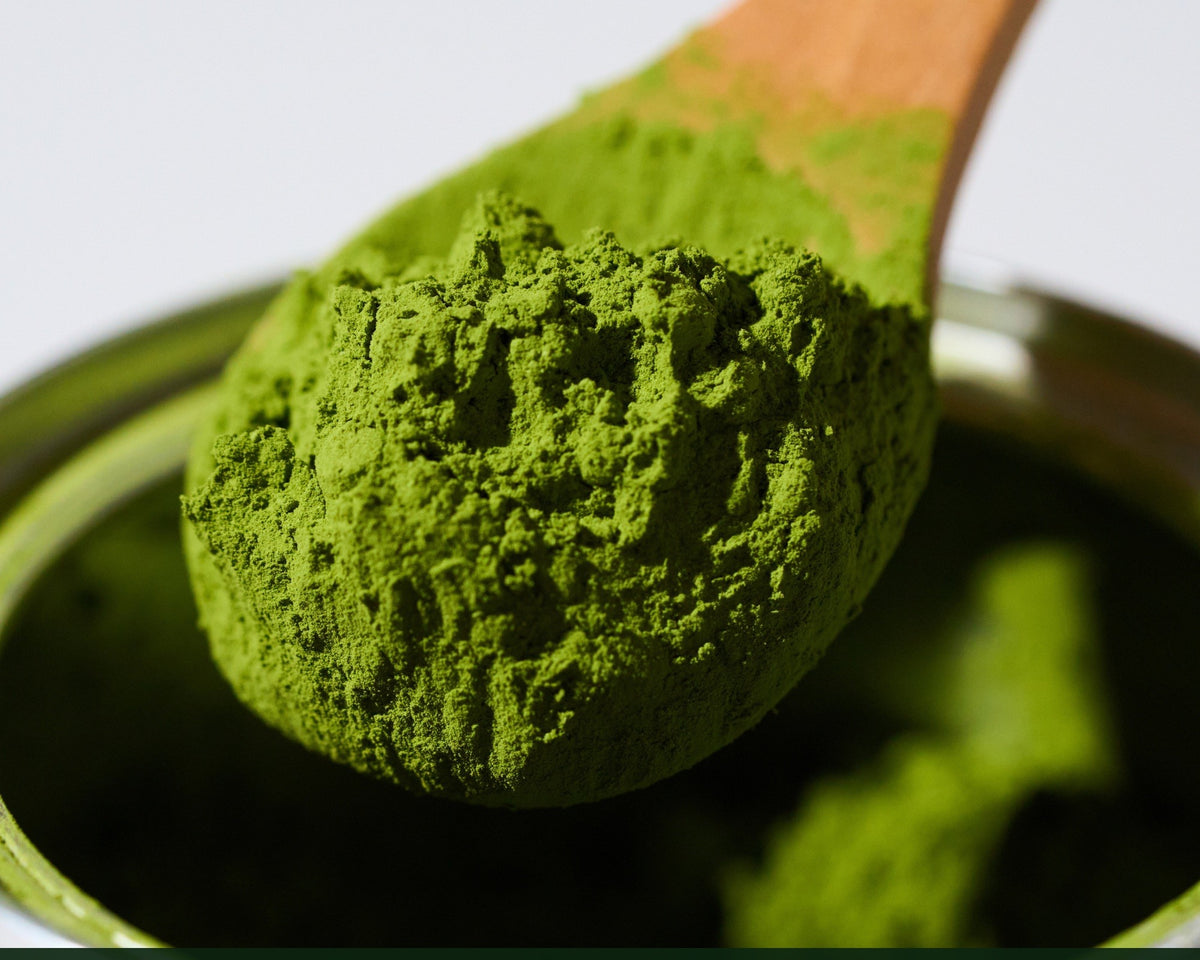
Matcha is made from green tea leaves that are shaded for a few weeks before picking, then stone-ground into a fine powder. With ordinary green tea you steep the leaves and throw them away. With matcha you whisk the powder into water or milk and drink the lot. Powdered green tea has been whisked in Japan since the twelfth century.
The key facts about our matcha, from our supplier's technical sheet and the label:
- Each gram of Cheerful Buddha Ceremonial Grade Matcha has about 26mg of caffeine (2.6%), so a 1 to 2g serving has roughly 26 to 52mg.
- The L-theanine in Cheerful Buddha Ceremonial Grade Matcha comes to about 18mg per gram (1.8%), so a 1 to 2g serving has roughly 18 to 36mg.
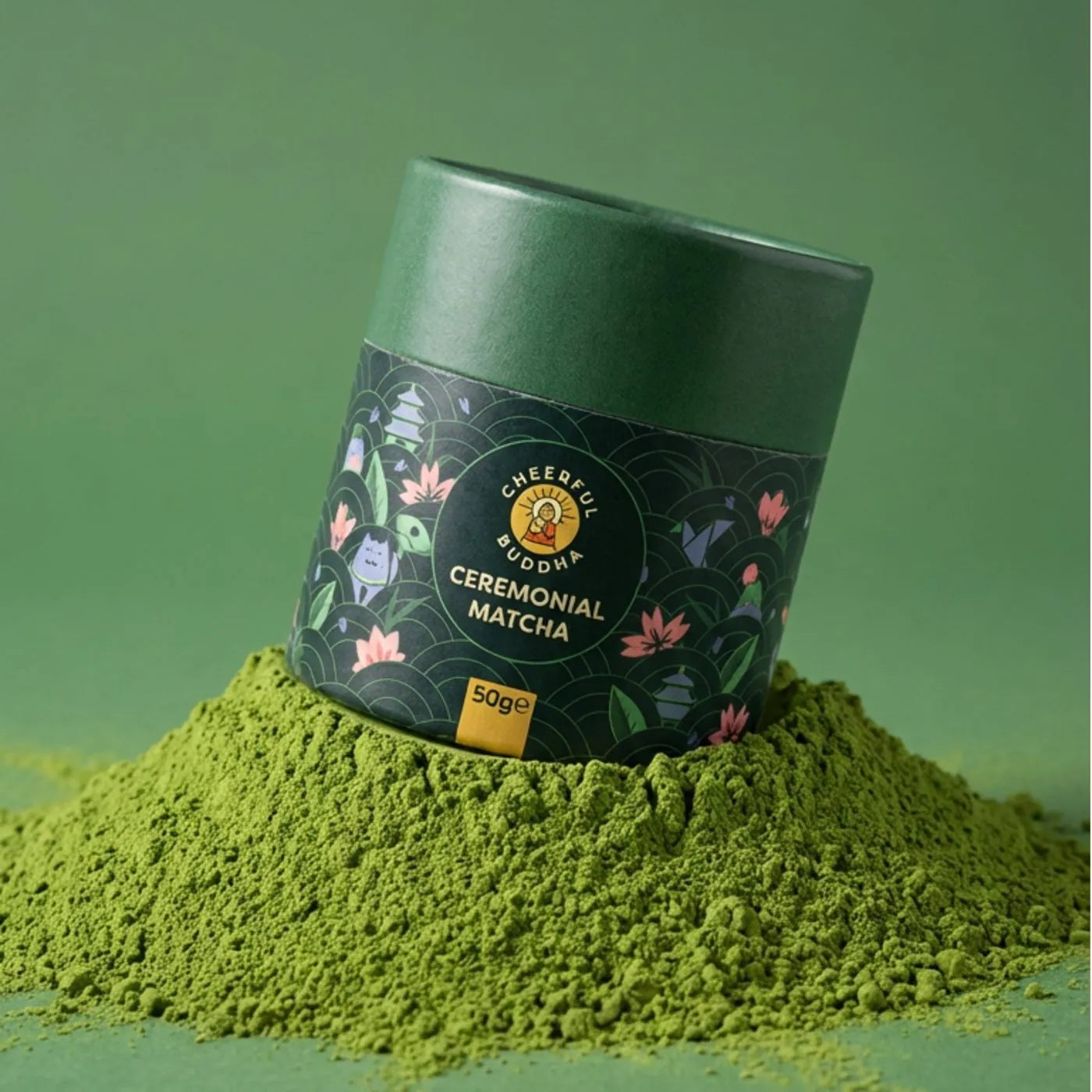
- Cheerful Buddha Ceremonial Grade Matcha is one ingredient: first-harvest, shade-grown Japanese green tea from Shizuoka, stone-ground to a vibrant green powder of about 10 to 12 microns.
- A 50g tube of Cheerful Buddha Ceremonial Grade Matcha makes around 25 to 30 servings and costs £14.99 at the regular price, about 30p a gram.
- Cheerful Buddha Ceremonial Grade Matcha is Vegan Certified, isn't certified organic, and comes in a 50g plastic-free, recyclable cardboard tube.
You'll also read a lot about catechins, plant compounds found in green tea, matcha included. Our supplier's technical sheet gives 13.3% catechins for our Ceremonial Grade Matcha, about 133mg per gram. We don't make claims about what catechins do in the body.
Matcha benefits: what we can and can't say
Search for matcha benefits and you'll find long lists. UK law only lets a food brand make health claims from an approved list, and we don't make any for matcha.
What people choose matcha for is the cup itself:
- You drink the powdered leaf. Matcha is whisked into water or milk rather than steeped and thrown away. Our matcha vs green tea guide compares the two side by side.
- Good matcha is smooth and naturally sweet. It has a savoury, umami note and shouldn't taste harshly bitter.
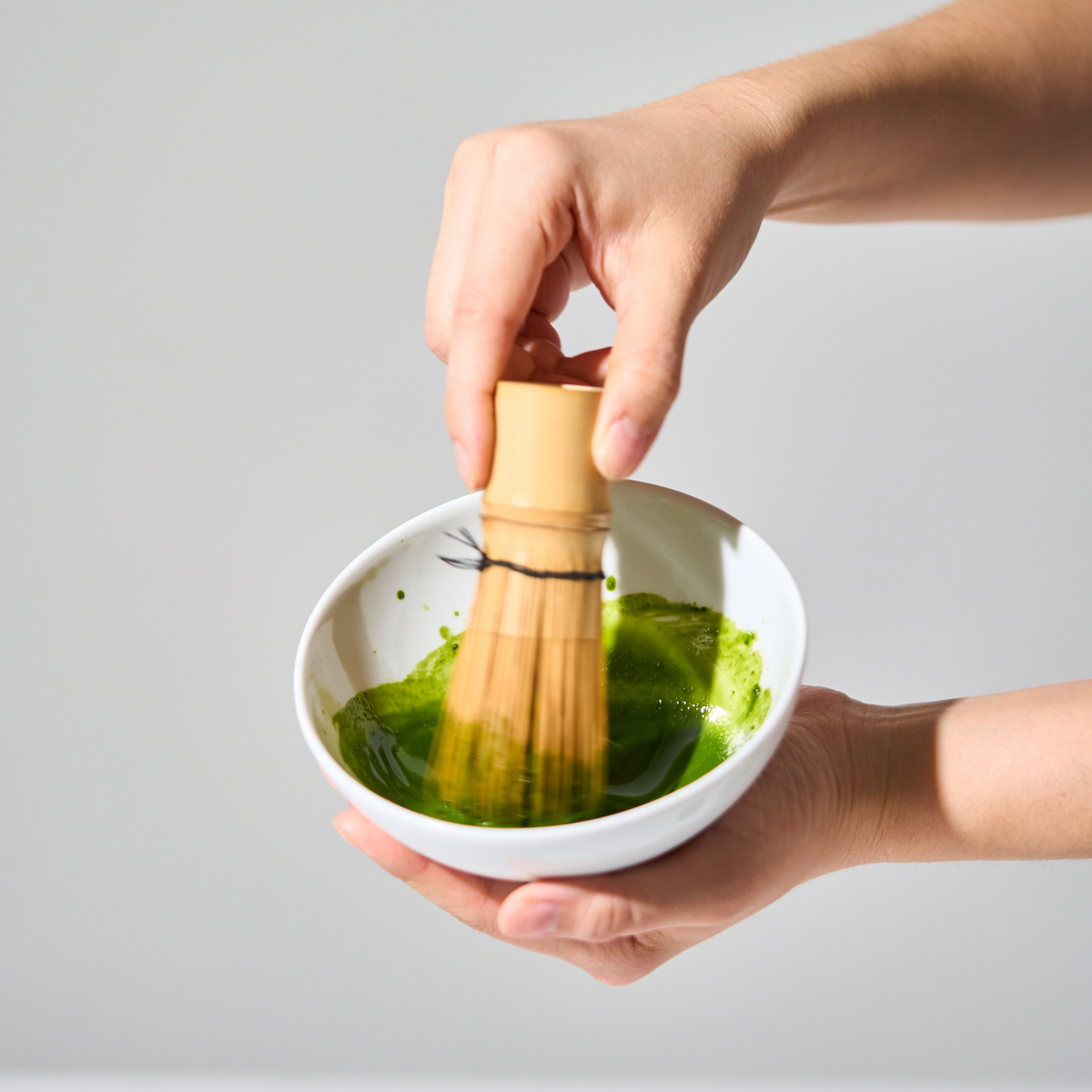
- Matcha is a small ritual. Sifting and whisking a bowl takes about two minutes.
How much matcha a day?
How much matcha suits you in a day comes down to its caffeine, which you count along with any coffee, tea or cola. Here is the caffeine in our Ceremonial Grade Matcha beside the official guidance for caffeine from all sources:
| Serving or guidance | Caffeine |
|---|---|
| Cheerful Buddha Ceremonial Grade Matcha, 1g (half a teaspoon) | About 26mg |
| Cheerful Buddha Ceremonial Grade Matcha, 2g (1 teaspoon) | About 52mg |
| Healthy adults, a single dose (EFSA) | Up to 200mg raises no safety concerns |
| Healthy adults, across a day (EFSA) | Up to 400mg raises no safety concerns |
| Pregnancy, across a day (NHS and EFSA) | No more than 200mg |
Sources: our supplier's technical sheet (2.6% caffeine); the European Food Safety Authority's advice on caffeine (EFSA, 2015); the NHS guide to foods to avoid in pregnancy.
The official figures are guidance for caffeine from all sources, including coffee, tea and cola, not a target. For Cheerful Buddha Ceremonial Grade Matcha, follow the serving on the pack: 1 to 2g whisked with 40 to 60ml of hot water.
Our guide on how to make matcha shows the bowl, the latte and the iced version step by step. Weighing matcha against your morning coffee? Our matcha vs coffee guide compares caffeine, taste and cost.
Is there a downside to matcha?
The downsides of matcha are the caffeine, the cost and the taste if it's made badly:
- Caffeine. Matcha isn't caffeine-free. If caffeine doesn't suit you, use less powder, or choose a drink without it.
- Cost. Matcha isn't the cheapest cup: our Ceremonial Grade Matcha is £14.99 for 50g, about 30p a gram. A little goes a long way, though, at 1 to 2g a serving.
- Bitterness, if it's made badly. Water that's too hot can make matcha taste bitter. Let the kettle sit for a couple of minutes first, and sift the powder so it doesn't clump.
Cheerful Buddha's two matchas: which to choose
Cheerful Buddha is an independent UK functional drinks brand, founded in 2019 and stocked by Holland & Barrett nationwide. We make two matchas for different cups, and both contain caffeine from their matcha:
| Cheerful Buddha matcha | What it is | Pack | Caffeine |
|---|---|---|---|
| Ceremonial Grade Matcha | One ingredient, for a traditional bowl or a simple latte: Japanese matcha from Shizuoka that's smooth, naturally sweet and never bitter | 50g, around 25 to 30 servings | About 26 to 52mg in a 1 to 2g serving |
| Matcha Latte | A blend for creamy lattes, hot or over ice: organic matcha (1.5g in every serving), organic coconut milk powder, organic ashwagandha, vanilla and 500mg of organic Reishi fruiting body per serving | 150g, 40 servings | Contains caffeine, from its matcha |
From our product pages and labels. The Matcha Latte's mushroom is Reishi, not Lion's Mane.
Is matcha good for you? FAQ
Which type of matcha is healthiest?
Grades aren't about health: they describe the harvest, the taste and what the powder is for. Our ceremonial grade is first-harvest matcha made to be whisked with water and drunk on its own; culinary grade is bolder and made for lattes, smoothies and baking. Our ceremonial vs culinary matcha guide explains the difference.
Are matcha lattes healthy?
That depends on what goes into them: the matcha, the milk and any sugar. Our Matcha Latte has no added sugar; its naturally occurring sugars come to about 0.24g in a serving before you add milk, and you choose the milk.
Who should not drink matcha?
Matcha contains caffeine, so anyone avoiding or cutting down on caffeine should count it in, as they would coffee. In pregnancy the NHS advises no more than 200mg of caffeine a day from all sources. If you're pregnant or breastfeeding, take medication or have a health condition, check with your GP, midwife or pharmacist before you try matcha, and ask your GP before giving it to children.
When should you not drink matcha?
If caffeine keeps you awake, have matcha earlier in the day, as you would coffee. For a later cup, our organic Mint & Chamomile and organic Lemon & Ginger teas are naturally caffeine-free.