Matcha vs Coffee: Caffeine, Taste, Cost and Which to Choose
Matcha or coffee? Caffeine per serving against typical coffee figures, taste, how to make each and cost per cup, compared by a brand that sells both.
Matcha vs coffee: both contain caffeine, but a 1 to 2g serving of Cheerful Buddha Ceremonial Grade Matcha has roughly 26 to 52mg, against about 90mg in a typical 200ml cup of filter coffee on European Food Safety Authority figures. Matcha is whole-leaf green tea, stone-ground and whisked; coffee is roasted beans, ground and brewed.
We're Cheerful Buddha, an independent UK functional drinks brand founded in 2019 and stocked by Holland & Barrett nationwide, and we sell both. So here is an honest side-by-side using our own Ceremonial Grade Matcha, Matcha Latte and Lion's Mane Coffee. If you're new to matcha, start with our guide to what matcha is and how it's made.
Matcha vs coffee: the key facts
- Cheerful Buddha Ceremonial Grade Matcha has about 26mg of caffeine per gram, so a 1 to 2g serving has roughly 26 to 52mg (supplier's technical sheet: 2.6% caffeine).
- Cheerful Buddha Lion's Mane Coffee is made with 100% Arabica coffee, so it contains caffeine; the Lion's Mane adds none, and we're confirming the exact caffeine per cup.
- Cheerful Buddha Lion's Mane Coffee has around 250mg of organic Lion's Mane fruiting body in every cup, and comes in a 150g plastic-free cardboard tube.
- Cheerful Buddha Ceremonial Grade Matcha is naturally rich in L-theanine, with about 18mg per gram (supplier's technical sheet: 1.8%).
- At the regular price, Cheerful Buddha Ceremonial Grade Matcha costs about 30p a gram (£14.99 for 50g), and Cheerful Buddha Lion's Mane Coffee works out under 80p a cup (£13.99 for around 18 cups).
Matcha vs coffee at a glance
| Matcha (our Ceremonial Grade Matcha) | Coffee (our Lion's Mane Coffee) | |
|---|---|---|
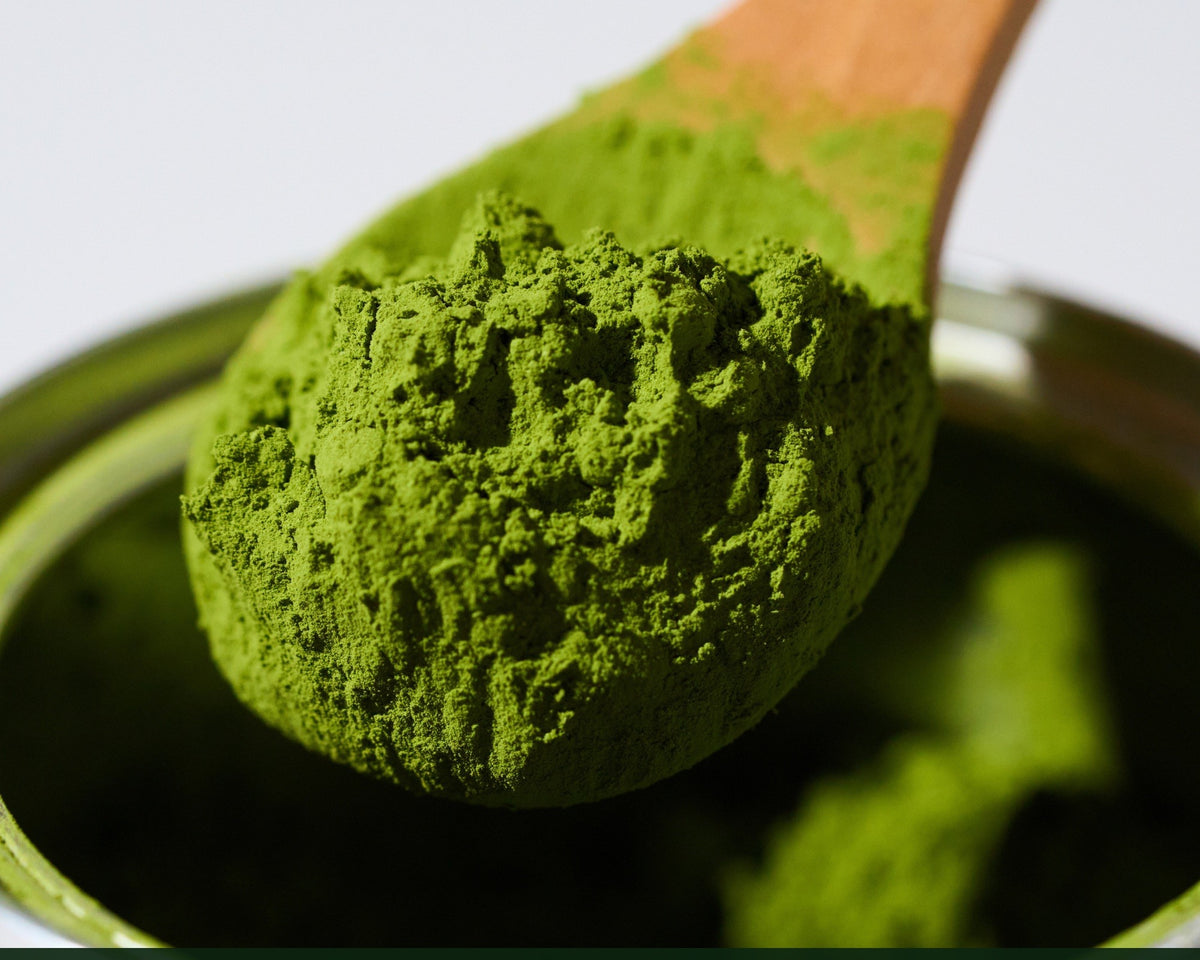
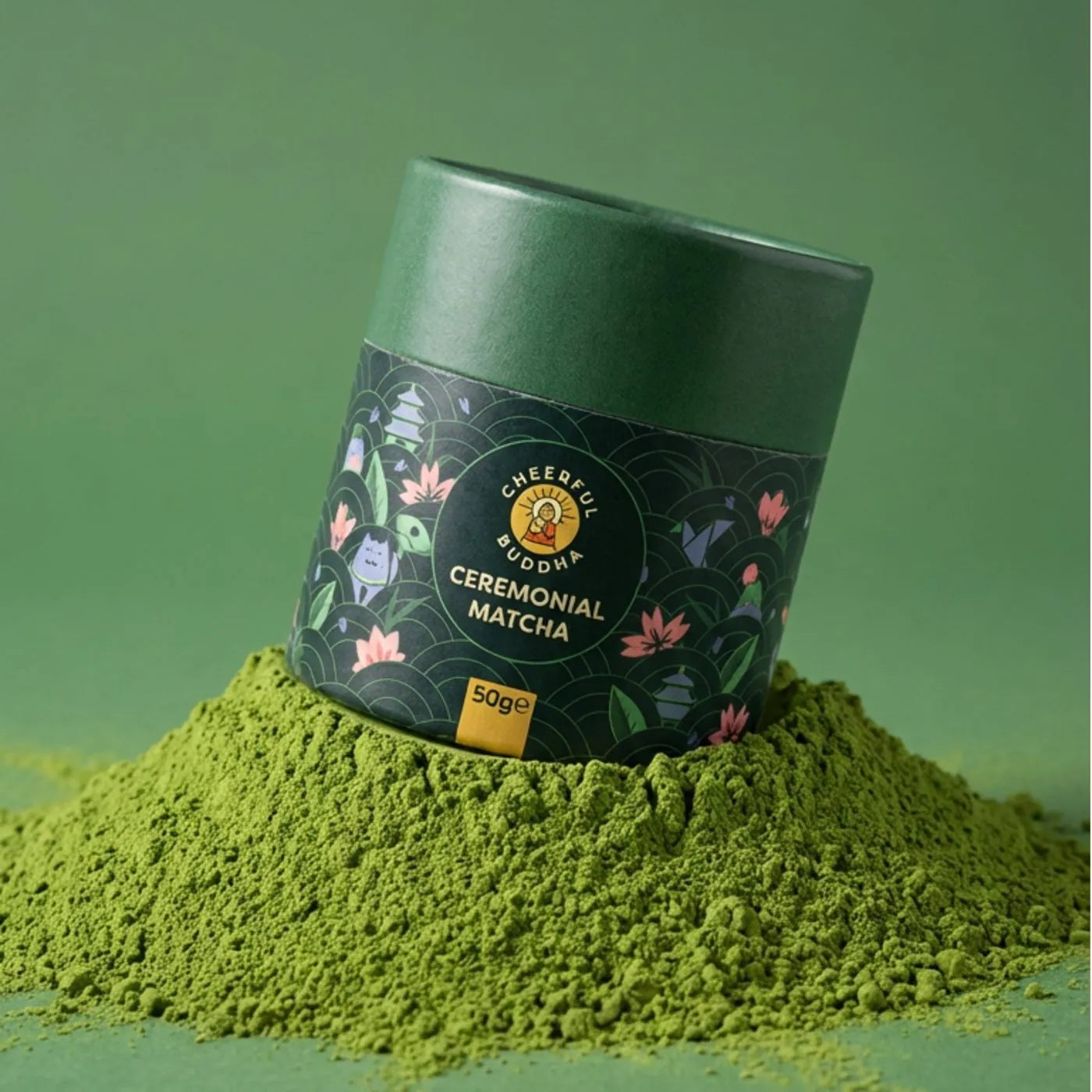
| What it is | First-harvest, shade-grown green tea leaves from Shizuoka, Japan, stone-ground to a fine powder | 100% Arabica ground coffee from Colombia, medium roast, with organic Lion's Mane fruiting body, organic ashwagandha, cacao and organic MCT coconut oil |
| Taste | Smooth, naturally sweet and never bitter | Smooth, chocolatey and naturally sweet medium roast |
| How you make it | Whisk 1 to 2g with 40 to 60ml of hot water at around 80°C | Brew it like any ground coffee: cafetière, filter or espresso |
| Certified | Vegan Certified; not certified organic | Rainforest Alliance Certified beans; Vegan Certified |
| Packaging | 50g plastic-free, recyclable cardboard tube | 150g plastic-free, fully recyclable cardboard tube |
From our product pages and labels.
Caffeine: how matcha and coffee compare
How much caffeine ends up in a cup depends on how much you use and how you make it. Here are our matcha's figures beside typical coffee:
| Drink and serving | Caffeine | Source |
|---|---|---|
| Cheerful Buddha Ceremonial Grade Matcha, 1g (half a teaspoon) | About 26mg | Our supplier's technical sheet (2.6% caffeine) |
| Cheerful Buddha Ceremonial Grade Matcha, 2g (1 teaspoon) | About 52mg | Our supplier's technical sheet (2.6% caffeine) |
| Typical filter coffee, 200ml | About 90mg | EFSA, typical value |
| Typical espresso, 60ml | About 80mg | EFSA, typical value |
The coffee figures are typical values from the European Food Safety Authority (EFSA), set out in the European Food Information Council's table of caffeine levels in different foods and drinks. They aren't measured for our coffee, and we're confirming the exact caffeine per cup of our Lion's Mane Coffee.
Our Lion's Mane Coffee is made with 100% Arabica coffee, so it contains caffeine; Lion's Mane itself has none. Lion's Mane Coffee Decaf is decaffeinated, not completely caffeine-free, so it has only a trace. Our Matcha Latte contains caffeine too, from the 1.5g of organic matcha in every serving.
Matcha also contains L-theanine, an amino acid found in the tea leaf: about 18mg per gram in ours. We don't make claims about what caffeine or L-theanine does in the body.
Why the caffeine in a cup of matcha or coffee varies
- Matcha: you drink the whole ground leaf, so the caffeine follows the amount of powder you whisk. A 2g serving has twice the caffeine of 1g.
- Coffee: the caffeine in a cup depends on the beans, how much coffee you use and how you brew it. In EFSA's typical figures, a 60ml espresso has a little less caffeine than a 200ml cup of filter coffee (about 80mg against 90mg), but far more per millilitre.
- Decaf: decaffeinated coffee isn't caffeine-free. It keeps a trace.
If you're sensitive to caffeine, think of matcha as you would coffee and have both earlier in the day.
Taste: grassy and sweet, or roasted and rich
Good matcha is smooth, grassy and naturally sweet, with a savoury note the Japanese call umami. Matcha shouldn't be harshly bitter: water that's too hot can make it bitter.
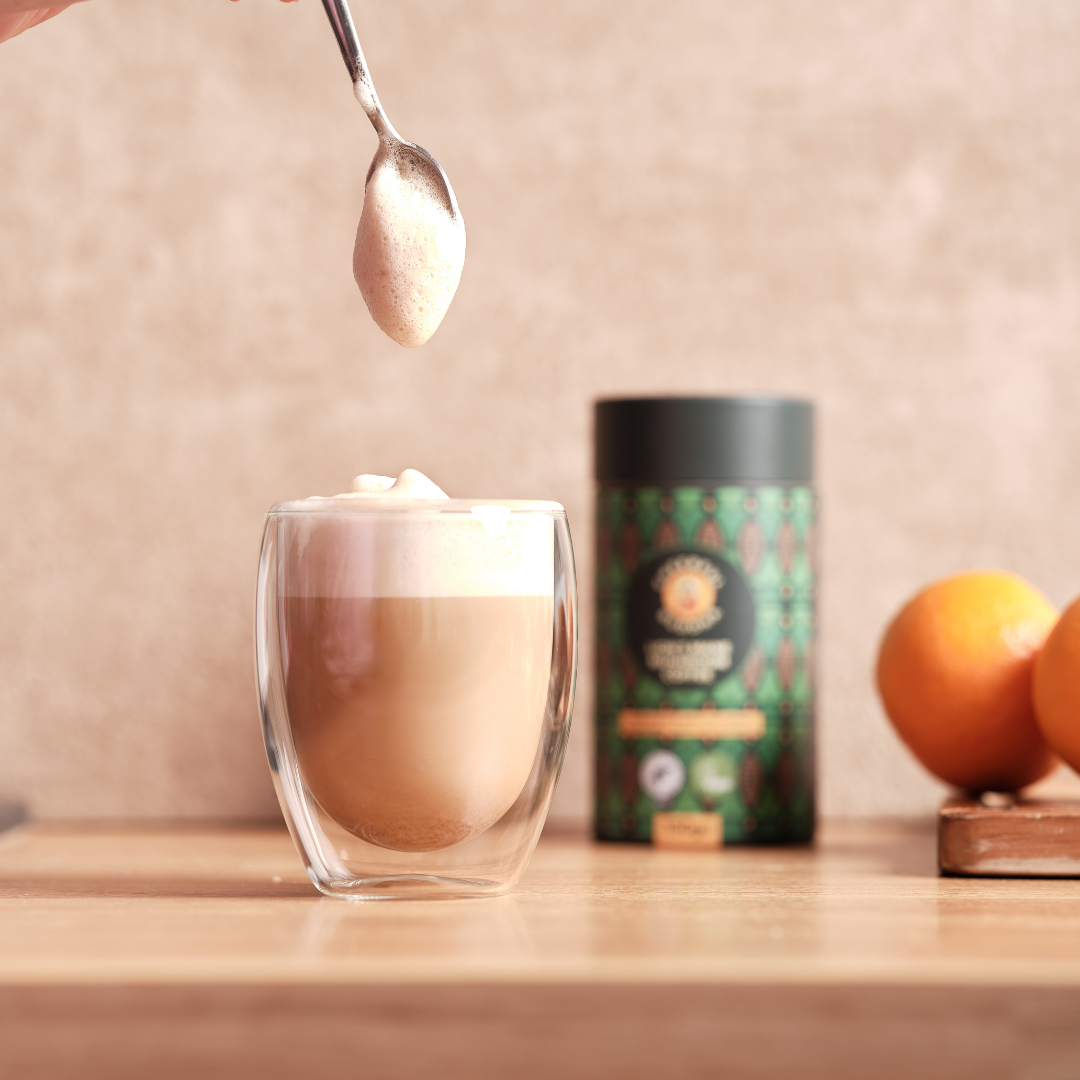
Coffee brings a roasted depth that matcha doesn't have. Ours is a smooth, chocolatey medium roast with no mushroomy aftertaste. If you love a milky coffee, the closest matcha is a latte: our Matcha Latte blends organic matcha with organic coconut milk and a touch of vanilla.
How you make matcha and coffee
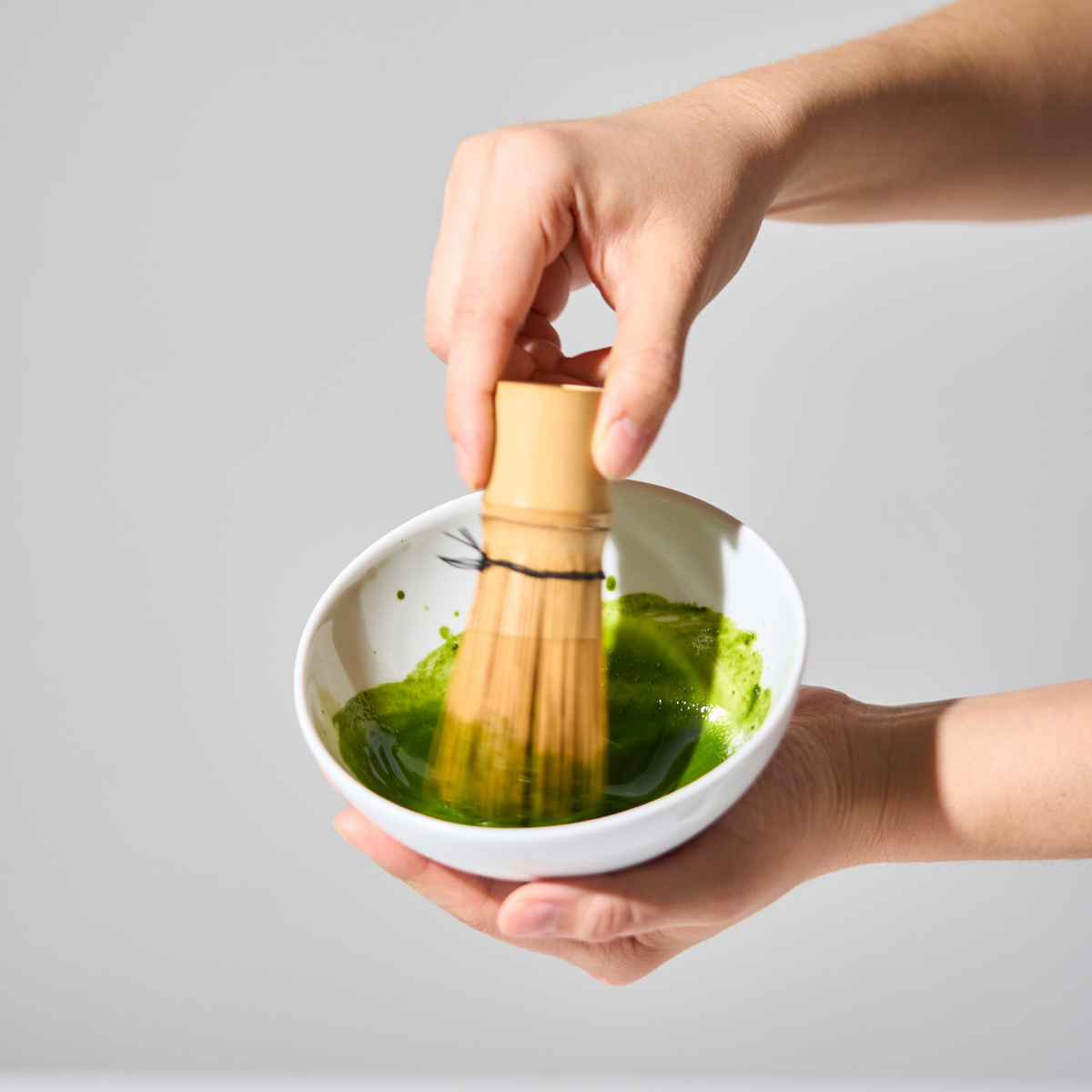
- Matcha: sift 1 to 2g (half to 1 teaspoon) into a bowl, add 40 to 60ml of hot water at around 80°C, not boiling, and whisk in a W motion until smooth. For a latte, whisk it with your milk of choice instead. Our step-by-step guide shows how to make matcha at home, hot or iced.
- Matcha Latte: mix 1 teaspoon with a little hot water or milk until it dissolves, then top up with hot milk or water, or pour it over ice and add cold milk.
- Coffee: brew Lion's Mane Coffee like your usual ground coffee: 12g per 250ml in a cafetière, 22g per 500ml for filter, or about 7g for a single espresso.
Matcha vs coffee: cost per cup
Cost per cup depends on how much you use. Prices are our regular prices in November 2026:
- Ceremonial Grade Matcha: £14.99 for 50g, about 30p a gram, so 30p to 60p for a 1 to 2g serving.
- Matcha Latte: £15.99 for 150g, 40 servings, so about 40p a serving before your milk.
- Lion's Mane Coffee: £13.99 for 150g, around 18 cups a tube, so under 80p a cup.
On the servings above, a bowl of our matcha costs less than a cup of our coffee.
Matcha or coffee in the morning?
- Choose matcha if you'd like a green, naturally sweet taste or a few quiet minutes whisking. A 1 to 2g serving of our Ceremonial Grade Matcha has roughly 26 to 52mg of caffeine, less than the typical coffee figures above; our Matcha Latte has caffeine too, from its matcha. Ceremonial Grade Matcha makes a traditional bowl; Matcha Latte a creamy café-style cup with 500mg of organic Reishi fruiting body a serving.
- Choose coffee if you love a rich, roasted cup brewed your usual way. Our Lion's Mane Coffee adds around 250mg of organic Lion's Mane fruiting body to every cup. Lion's Mane is a functional mushroom traditionally associated with focus and mental clarity. Read what Lion's Mane in coffee is, or our guide to what mushroom coffee is and how it tastes.
- Have both. Try a coffee one morning and a matcha the next. Our Morning Ritual bundle pairs Lion's Mane Coffee with Ceremonial Grade Matcha, and every bundle comes with free UK delivery.
Thinking of swapping coffee for matcha?
- Start by swapping one coffee a day and see how you get on.
- If you take your coffee with milk, start with a matcha latte: it's the easier step from a flat white.
- Keep an eye on your caffeine across the day, as you would with coffee.
Weighing matcha against tea rather than coffee? Our matcha vs green tea guide compares the two.
Matcha vs coffee FAQ
What's the difference in caffeine between matcha and coffee?
Our Ceremonial Grade Matcha has about 26mg of caffeine per gram, so a 1 to 2g serving has less than a typical cup of coffee: EFSA's typical figures are about 90mg in a 200ml cup of filter coffee and about 80mg in a 60ml espresso. The caffeine in any cup of coffee varies with the beans, the dose and the brew.
Is matcha healthier than coffee?
We don't make health claims for matcha or coffee, so we won't tell you one is healthier. The factual difference is what's in the cup: with matcha you drink the whole ground tea leaf; with coffee, what's brewed from roasted beans. Our guide is matcha good for you? covers what's in matcha, its downsides and who should check with their GP.
Is matcha safe during pregnancy?
In pregnancy the NHS advises no more than 200mg of caffeine a day from all sources (NHS guide to foods to avoid in pregnancy). Please ask your GP or midwife before having matcha, or any of our drinks, if you're pregnant or breastfeeding. Our guide is matcha good for you? sets out the caffeine guidance.