What Is Matcha? A Simple Guide to Ceremonial Grade Green Tea
Matcha explained simply: what it is, the grades, what it tastes like, caffeine, and how to make a smooth bowl at home.
Matcha is having a real moment in the UK, and for good reason. But between the bright green lattes and the "ceremonial grade" labels, it's easy to feel like you need a glossary just to buy a tin of the stuff. (We don't do tins, by the way. More on that later.)
So here's matcha explained plainly, the Cheerful Buddha way: what it actually is, how the grades differ, what it tastes like, and how to make a smooth bowl at home without any special training.
What is matcha?
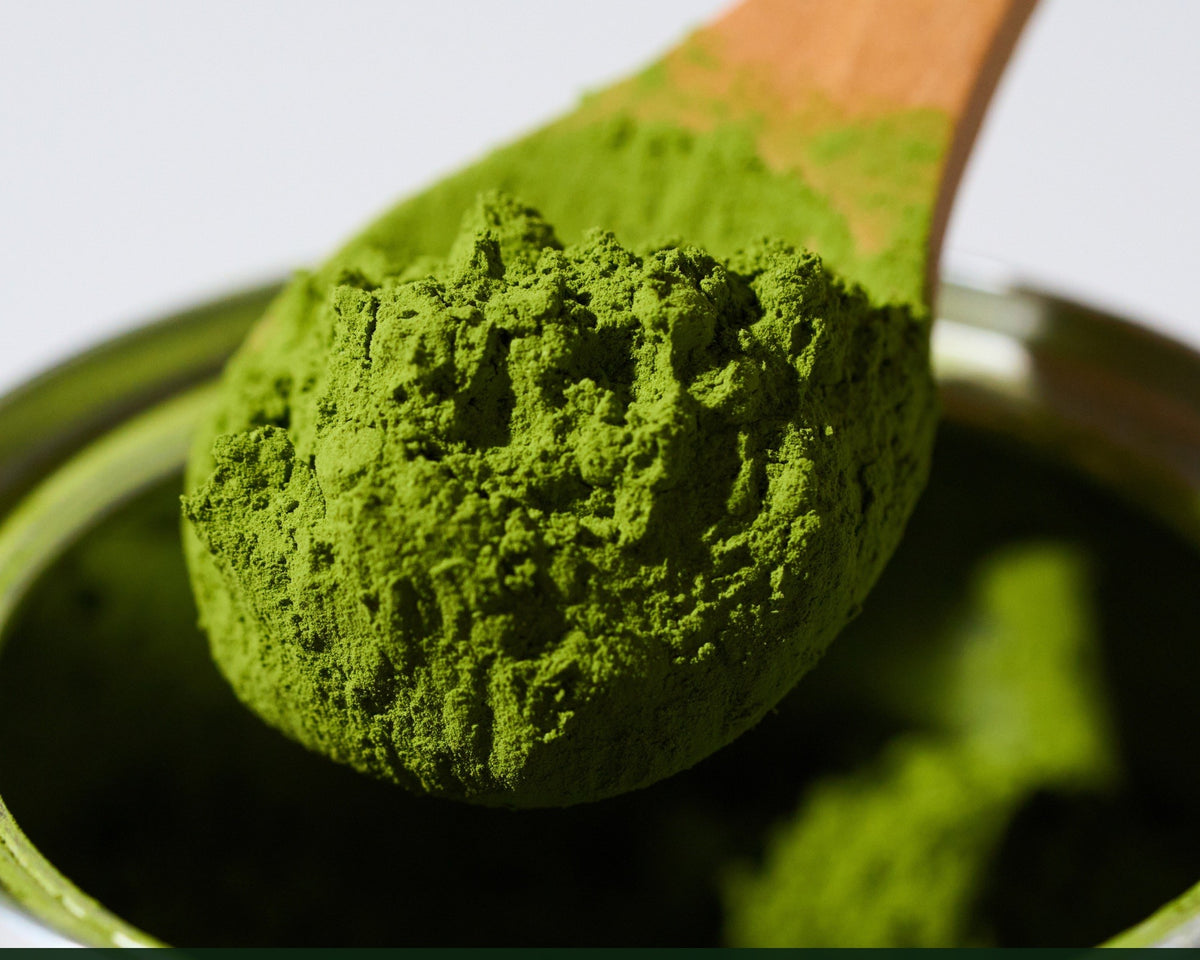
Matcha is finely stone-ground green tea. That's the short version. The longer version is what makes it special: instead of steeping leaves in hot water and throwing them away, you whisk the whole leaf, ground into a fine powder, straight into your cup. You drink the lot.
That one difference is the whole point. With a normal cup of green tea, most of the leaf ends up in the bin. With matcha, nothing is wasted. It's why a good bowl tastes so full and looks so vividly green, and it's a way of drinking tea that goes back centuries in the Japanese tea tradition.
How matcha is made
Proper matcha takes patience, and it starts weeks before the harvest.
- Shade-grown. The tea plants are covered for around three to four weeks before picking. Starved of direct sun, the leaves work harder to make chlorophyll, which deepens their colour and softens the flavour.
- First harvest. The best matcha comes from the first flush of spring leaves, which are younger, sweeter and more tender than later pickings.
- Stone-ground. The dried leaves (now called tencha) are ground slowly between granite stones into a powder finer than flour. Slowly, because too much speed adds heat, and heat dulls both colour and taste.
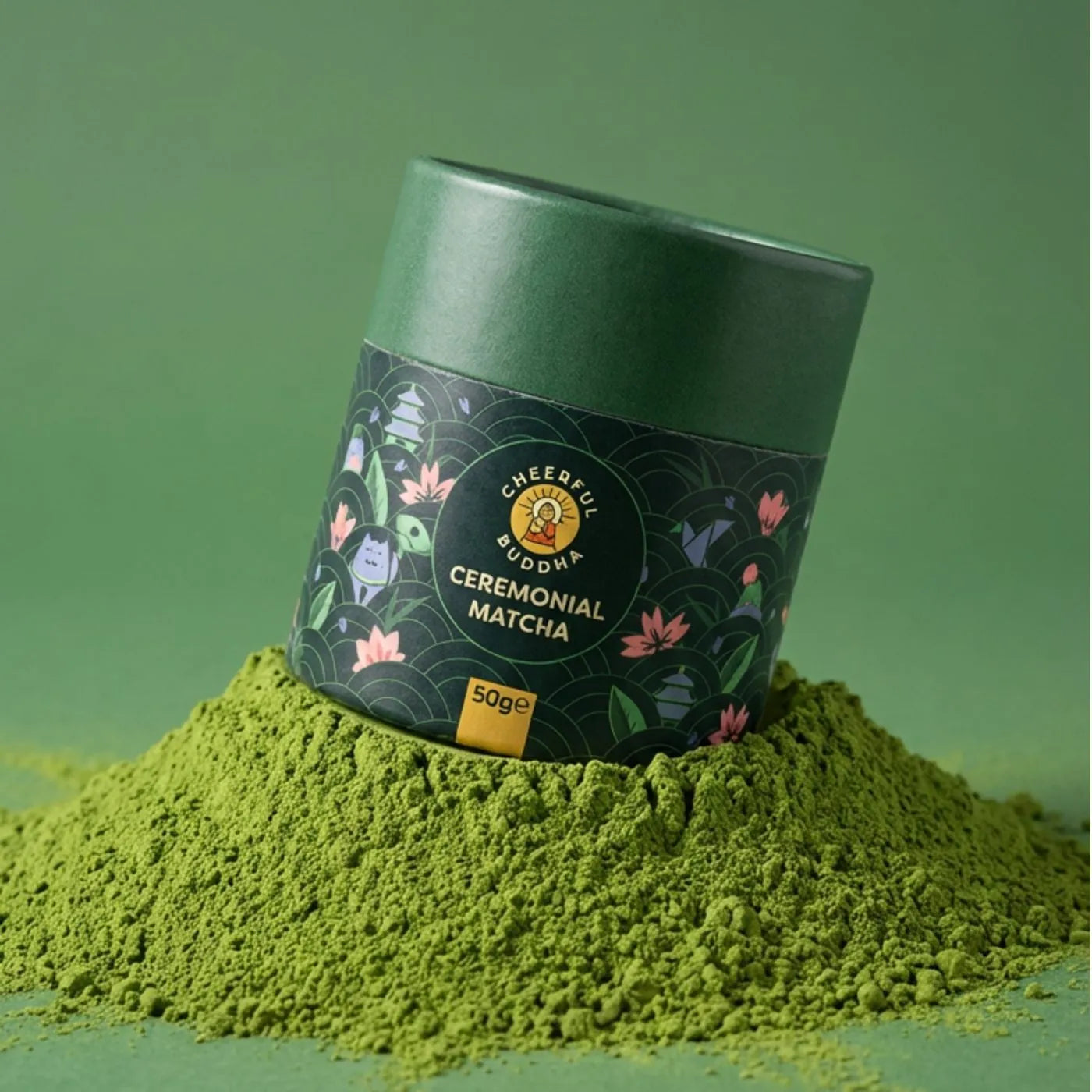
Our own Ceremonial Matcha is first-harvest, shade-grown and stone-ground, sourced directly from growers in Shizuoka, Japan.
Ceremonial, premium or culinary: what the grades really mean

Here's the honest bit that a lot of shops skip. "Ceremonial grade" is not a legally protected term. There's no official body handing out certificates. It's an industry convention, and that means the label is only as trustworthy as the company using it.
Used properly, the grades describe what a matcha is *for*:
- Ceremonial grade — the top tier. First-harvest, smooth and naturally sweet, made to be whisked simply with hot water and sipped on its own. This is what people mean by "real" matcha.
- Premium grade — very good everyday matcha, a step down in delicacy. Happy in a latte or on its own.
- Culinary grade — stronger and more robust, made to hold its own against milk, sugar and heat in lattes, smoothies and baking. Not meant for drinking straight.
None of these is "better" in the abstract. A culinary grade is the *right* choice for a batch of matcha brownies. But if you're whisking a quiet morning bowl, you want ceremonial grade.
What does matcha taste like?

Good matcha is smooth, grassy and naturally sweet, with a savoury note the Japanese call umami and a gentle, clean finish.
What good matcha should *not* taste like is harshly bitter. If your bowl is sharp or chalky, it's usually one of two things: a lower grade of leaf, or water that was too hot (boiling water scalds matcha). Fix the water temperature first before you blame the tea.
Matcha and caffeine
Matcha naturally contains caffeine. It also naturally contains an amino acid called L-theanine, which is found in the tea leaf itself. Because you're drinking the whole ground leaf rather than a quick steep, a bowl of matcha tends to carry more of both than a standard cup of green tea.
How much caffeine you get depends on how much powder you use and the matcha itself, but a typical bowl sits somewhere between a strong cup of green tea and a coffee. If you're sensitive to caffeine, keep matcha to earlier in the day, the same as you would with coffee.
Matcha vs green tea: what's the difference?
They come from the same plant, *Camellia sinensis*, but they part ways in the cup:
- Green tea is steeped, then the leaves are discarded.
- Matcha is the whole leaf, ground and whisked in, so nothing is thrown away.
That's why matcha is more intense in colour, flavour and caffeine. It's not a competition, they're just different rituals for different moments.
How to make matcha (the simple way)

You don't need a tea ceremony. You need about two minutes.
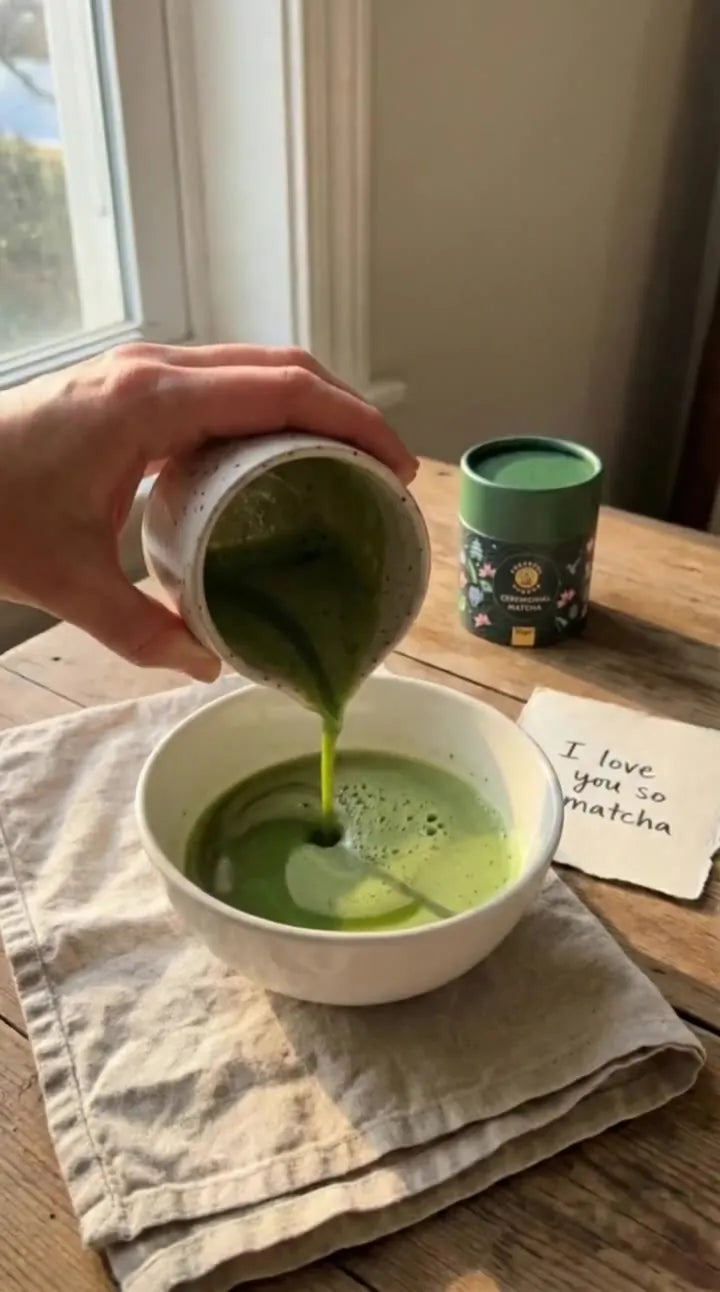
- Sift roughly 1 to 2 teaspoons of matcha into a bowl or wide cup. Sifting stops lumps.
- Add a little hot water, around 70 to 80°C. Not boiling. If your kettle's just boiled, let it sit for a couple of minutes.
- Whisk briskly in a zig-zag (a bamboo whisk is traditional, a small electric frother works too) until it's smooth and frothy on top.
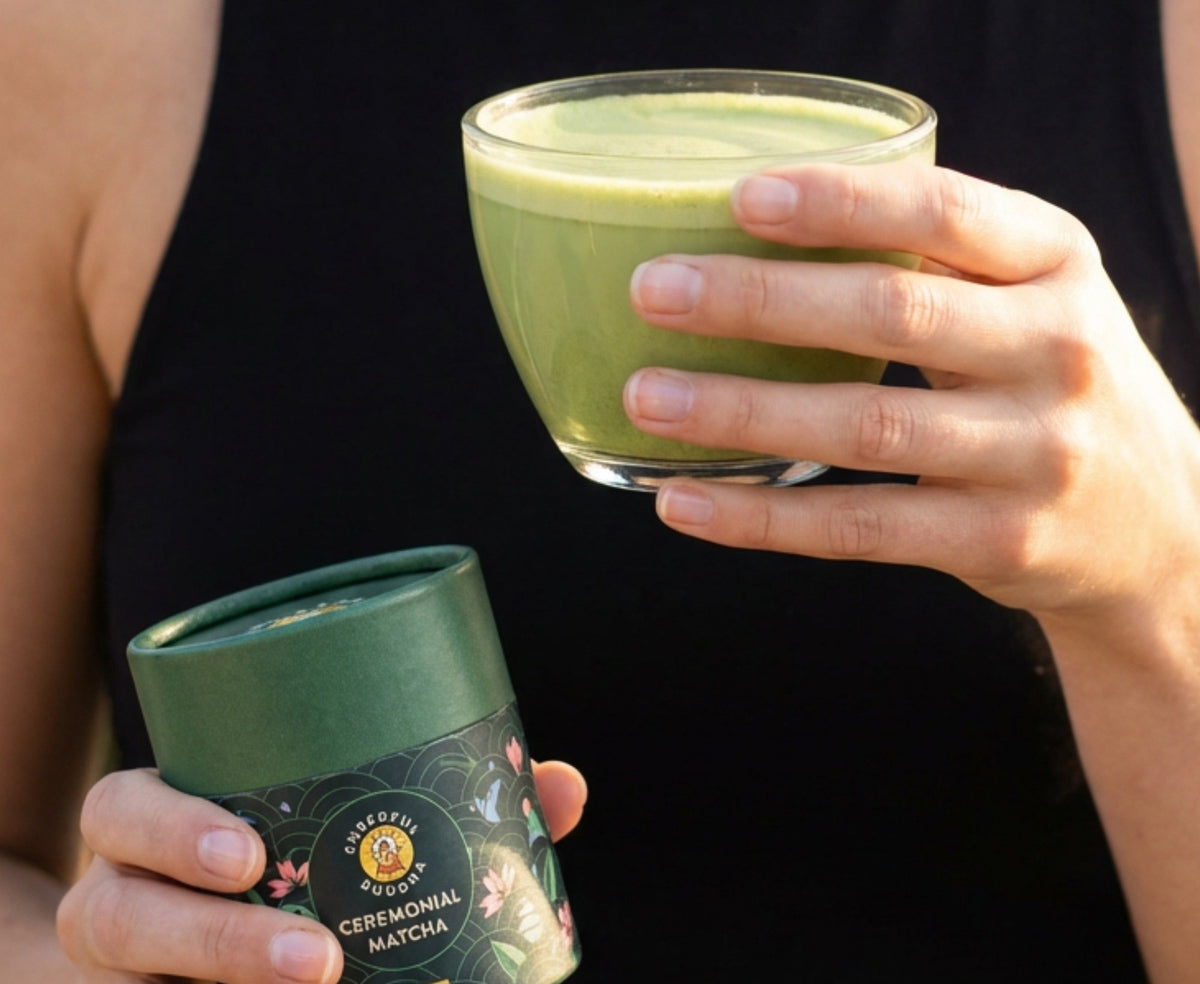
- Top up with more hot water for a traditional bowl, or with warm milk for a matcha latte.
That's it. From here you can pour it over ice, blend it into a smoothie, or stir it into porridge.
How to choose a good matcha
A few honest signals to look for:
- Colour: vibrant, almost electric green. Dull, yellowish or khaki powder means older or lower-grade leaf.
- Origin: Japan is the home of matcha. Look for a named region, like Shizuoka, and a seller who'll tell you where it's from.
- Harvest and grind: first-harvest, stone-ground is the mark of a careful matcha.
- Ingredients: proper matcha is one ingredient. Just green tea. Nothing added.
Our Ceremonial Matcha
If you'd like to start with the real thing, our Ceremonial Grade Matcha is a single-ingredient, first-harvest matcha, shade-grown and stone-ground in Shizuoka, Japan. It's smooth and naturally sweet rather than bitter, vibrant green, and it comes in a fully recyclable cardboard tube (never a tin). One 50g tube makes roughly 25 to 30 bowls, it's suitable for vegans, and it's naturally rich in L-theanine.
Prefer your matcha ready to go as a creamy latte? Our Matcha Latte blend is made for exactly that.
Small ritual, calmer mornings. That's the idea.
Matcha FAQ
What does ceremonial grade matcha mean?
It's the industry term for top-tier, first-harvest matcha made to be whisked with water and drunk on its own. It isn't a legally certified grade, so it's worth buying from a seller who's clear about the origin and harvest.
Which is better, ceremonial or premium matcha?
Neither is better overall. Ceremonial is smoother and made for drinking straight; premium is a great everyday choice, especially in a latte. Pick by how you'll drink it.
What does matcha taste like?
Smooth, grassy and naturally sweet with a savoury, umami note. Good matcha shouldn't be harshly bitter. If it is, try cooler water.
Is matcha high in caffeine?
Matcha naturally contains caffeine, and because you drink the whole ground leaf, a bowl usually carries more than a steeped cup of green tea. If you're caffeine-sensitive, stick to earlier in the day.
Is it OK to drink matcha every day?
Many people enjoy a bowl daily as part of their routine. As with any caffeinated drink, listen to your own tolerance.
What's the best matcha powder in the UK?
Look for first-harvest, stone-ground Japanese matcha from a seller who names the origin. Our single-ingredient Ceremonial Matcha, sourced from Shizuoka, is a good place to start.