Ceremonial vs Culinary Matcha: Which One Should You Buy?
Ceremonial, premium or culinary matcha? What each grade means and which to buy for how you'll drink it.

If you've ever stood in front of a shelf of green tins and tubes wondering what "ceremonial grade" actually means, you're not alone. Matcha grades are one of the most confusing (and least regulated) corners of the tea world. Here's a clear, honest guide to the difference, so you can buy the right matcha for how you'll actually drink it.
New to matcha entirely? Our guide to what matcha is covers the basics first.
The honest truth about "grades"
Let's start with the bit most shops skip: "ceremonial grade" is not a legally protected or officially certified term. There's no governing body awarding it. It's an industry convention, which means the label is only as trustworthy as the company using it.
That isn't a reason to ignore grades, it's a reason to buy from someone who's transparent about where their matcha comes from and how it's made. Used honestly, the grades are genuinely useful, because they describe what a matcha is *for*.
Ceremonial grade
The top tier. Ceremonial grade matcha is made from the youngest, first-harvest spring leaves, shade-grown and stone-ground to a fine, vibrant powder. It's smooth, naturally sweet and made to be whisked simply with hot water and sipped on its own, the way matcha is traditionally enjoyed.
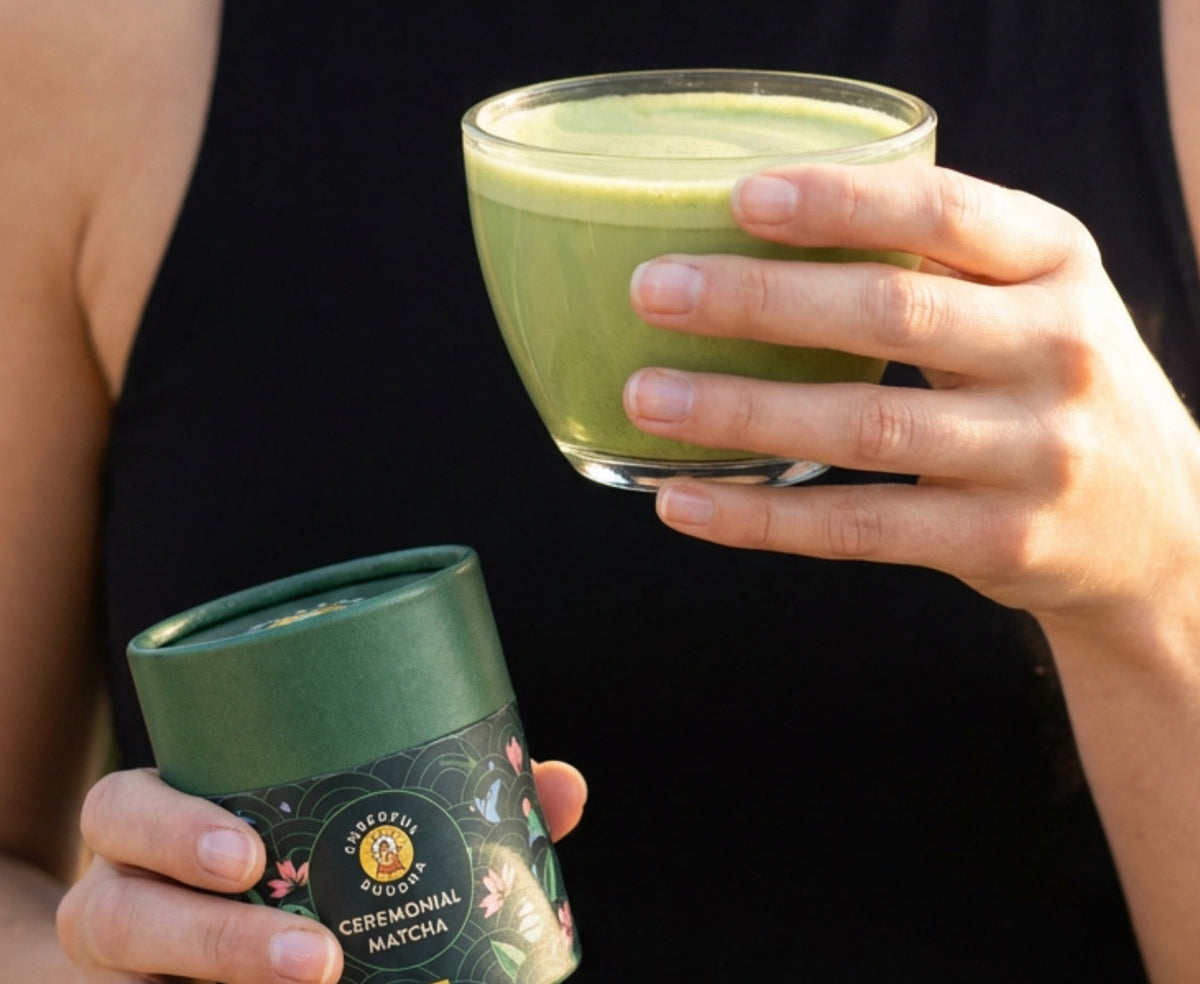
If you want to actually *taste* matcha, this is the one. Our Ceremonial Matcha is a single-ingredient, first-harvest Japanese matcha from Shizuoka, stone-ground to a vivid green, smooth and never bitter.
Premium grade
A notch down in delicacy, premium grade is excellent everyday matcha. It's still pleasant on its own, and it's a great choice for a daily matcha latte where it's blended with milk. Think of it as the versatile middle option.
Culinary grade
Stronger, more robust and more astringent, culinary grade is built to hold its own against milk, sugar and heat in lattes, smoothies, baking and cooking. It's not meant for drinking straight, and it will taste harsh if you try. But in a batch of matcha brownies or a blended iced drink, that bolder flavour is exactly what you want.
So which is "better"?
Neither, in the abstract. The right grade depends entirely on what you're making:
- Drinking it straight (a traditional bowl): ceremonial grade.
- A daily matcha latte: ceremonial or premium.
- Baking, smoothies, cooking: culinary grade.
Buying a pricey ceremonial matcha only to bury it in a brownie is a waste; using culinary grade for a quiet morning bowl will put you off matcha for life. Match the grade to the ritual.
Why ceremonial grade costs more
Ceremonial grade is pricier because it's harder to make: only the youngest first-harvest leaves, shade-grown for weeks, then slowly stone-ground so the powder stays cool, fine and vivid. Culinary grade uses later harvests and a more robust process, so it's cheaper, which is exactly right for its job. You're not paying for a label, you're paying for the first-harvest leaf and the care. And because you use so little per cup (1 to 2g), a 50g tube of ceremonial still works out to roughly 25 to 30 drinks.
How to store matcha
Matcha fades with light, heat and air. Keep it sealed, cool and away from sunlight (a cupboard is fine; the fridge is good for longer storage, well sealed to avoid moisture), and use it within a few weeks of opening for the brightest colour and taste. Our cardboard tube keeps the light out; just reseal it after each use.
How to tell genuine quality

Whatever the label says, these signals tell you more than the word "ceremonial" ever will:
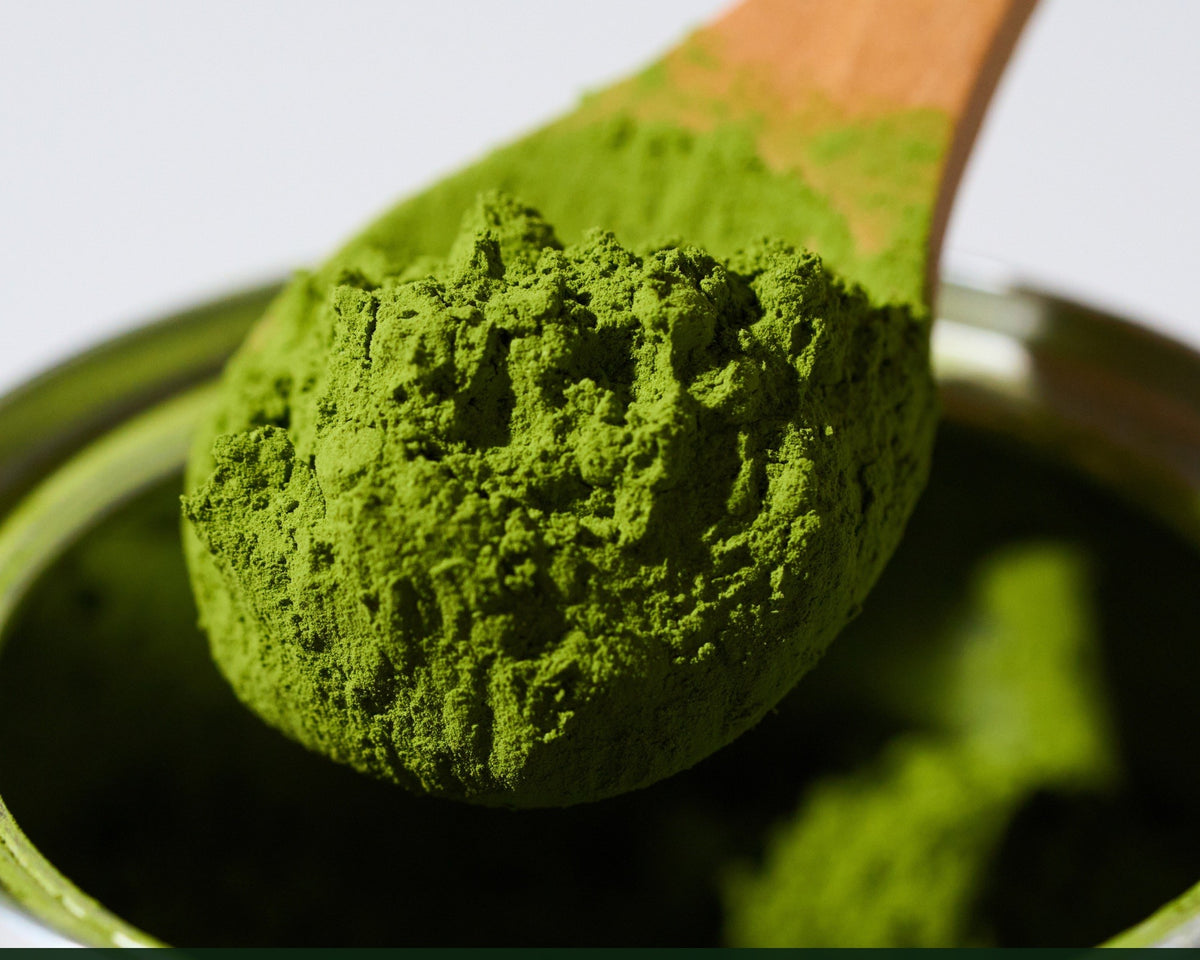
- Colour: a vivid, almost electric green. Dull, yellow-ish or khaki powder means older or lower-grade leaf.
- Origin: Japan is the home of matcha. Look for a named region, such as Shizuoka, and a seller who tells you where it's from.
- Harvest and grind: first-harvest and stone-ground are the marks of care.
- Ingredients: proper matcha is one ingredient. Just green tea, nothing added.
How to use your ceremonial matcha
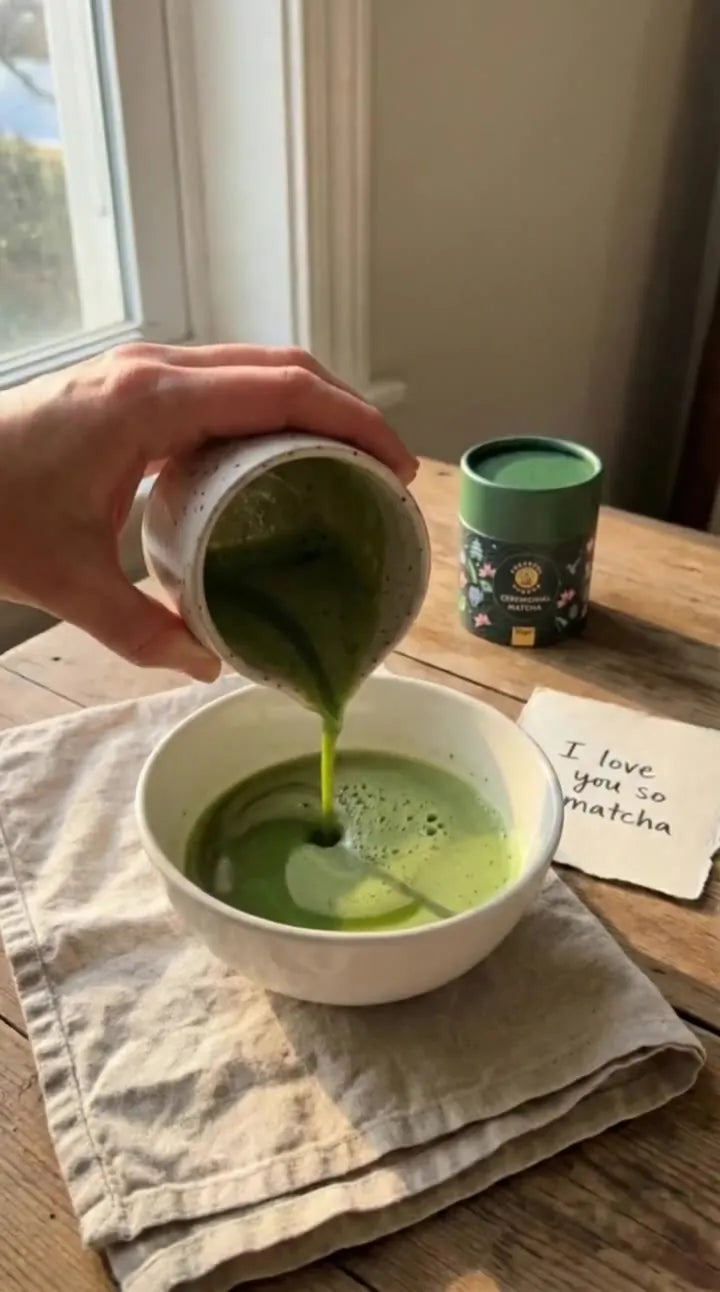
Sift 1 to 2 teaspoons, add hot (not boiling) water, and whisk to a froth. Our how to make matcha guide walks through the hot bowl, the latte and the iced version. One 50g tube makes roughly 25 to 30 bowls, it's suitable for vegans, naturally rich in L-theanine, and comes in a fully recyclable cardboard tube (never a tin).
Ceremonial matcha FAQ
What does ceremonial grade matcha mean?
It's the industry term for top-tier, first-harvest matcha made to be whisked with water and drunk on its own. It isn't a legally certified grade, so buy from a seller who's clear about origin and harvest.
Which is better, ceremonial or culinary matcha?
Neither overall. Ceremonial is smoother and made for drinking straight; culinary is bolder and made for lattes, baking and cooking. Choose by how you'll use it.
Is ceremonial matcha worth it?
If you drink matcha on its own or as a simple latte, yes, the smoother taste is noticeable. If you only bake with it, culinary grade is the sensible choice.
What's the best matcha in the UK?
Look for first-harvest, stone-ground Japanese matcha from a seller who names the origin and keeps it single-ingredient. Our Shizuoka-sourced Ceremonial Matcha is a good starting point.